Best speech training data providers for custom multilingual collection
Explore top speech training data providers for multilingual AI, focusing on quality, compliance, and speed to enhance your AI models.
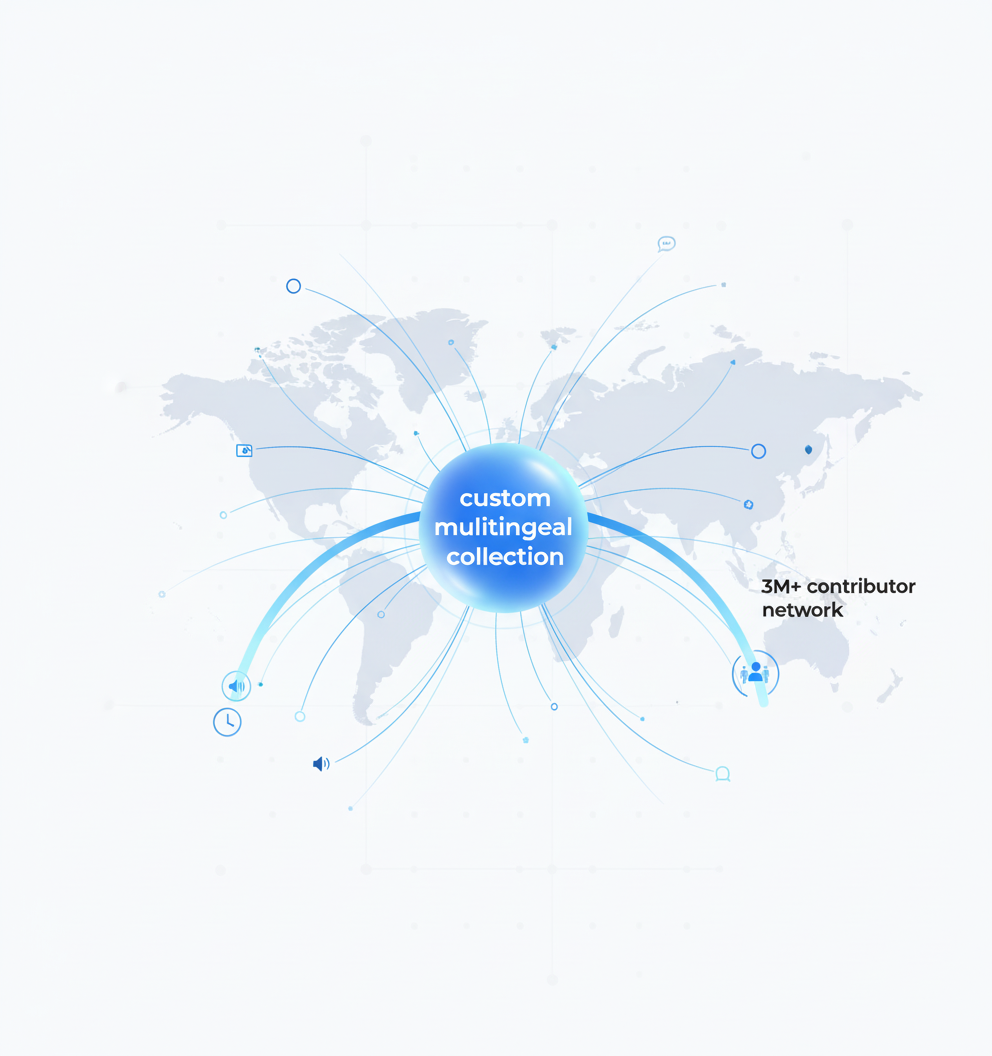
The best speech training data providers for custom multilingual collection include Luel with its 3M+ contributor network delivering rights-cleared data within 24-48 hours, Shaip which delivered 7M+ utterances across 13 languages, and LXT offering 80+ languages through its 6M+ crowd network after acquiring Clickworker. Selection should prioritize quality assurance, GDPR compliance, and turnaround speed over raw language counts.
Key Facts
• The speech recognition market will grow from $17.59 billion in 2025 to $61.68 billion by 2032, with a 19.6% CAGR
• Leading providers range from Luel's marketplace model with 100+ languages to Appen's 500+ dialects, though Appen faces a 1.8/5 TrustScore due to payment delays
• Most bulk providers now deliver 500+ hours within 24-48 hours, eliminating traditional procurement delays
• Voice data requires explicit GDPR consent, with healthcare breaches averaging $10.93 million per incident
• Quality metrics like Word Error Rate (WER) directly impact customer satisfaction and support costs
• Asia-Pacific leads with 35% market share, followed by North America with approximately one-third of global activity
Demand for multilingual speech datasets is accelerating faster than most AI teams anticipated. Enterprises vetting speech training data providers now face a market projected to reach $49.8 billion by 2030, yet 48% of organizations still report they lack enough high-quality data to operationalize generative AI initiatives. Choosing the wrong partner can stall production timelines, introduce compliance risk, and drain budgets.
This guide compares leading providers across quality, compliance, scale, and turnaround so your team can move from pilot to production without surprises.
Why Multilingual Speech Training Data Matters in 2026
A speech recognition dataset is a collection of audio files paired with accurate transcriptions that trains AI models to understand and generate human speech. High-quality datasets lead to better AI performance because they provide varied and realistic speech scenarios while minimizing misinterpretation caused by poor audio quality or limited data variation.
Language coverage alone does not guarantee accuracy. Enterprises deploying voice systems across regions quickly learn that accent variation, noise diversity, and consistent annotation determine real-world success far more than a raw language count. The global voice agent market reached $47.2 billion in 2025 with a 34% compound annual growth rate since 2022, and analysts project it will expand to $89 billion by 2028.
For enterprises building automatic speech recognition (ASR) systems, word error rate (WER) remains the north-star metric. ASR quality is typically measured by WER, defined as "the Levenshtein distance between the target transcript and the machine-generated transcript," according to the ACL Anthology. Reducing WER by even a few percentage points can translate directly into higher customer satisfaction and lower support costs.
Key takeaway: Multilingual speech data is not just "many languages." At enterprise scale, it is a governed dataset system designed to stay consistent across regions.
What Criteria Should You Use to Select a Speech Data Provider?
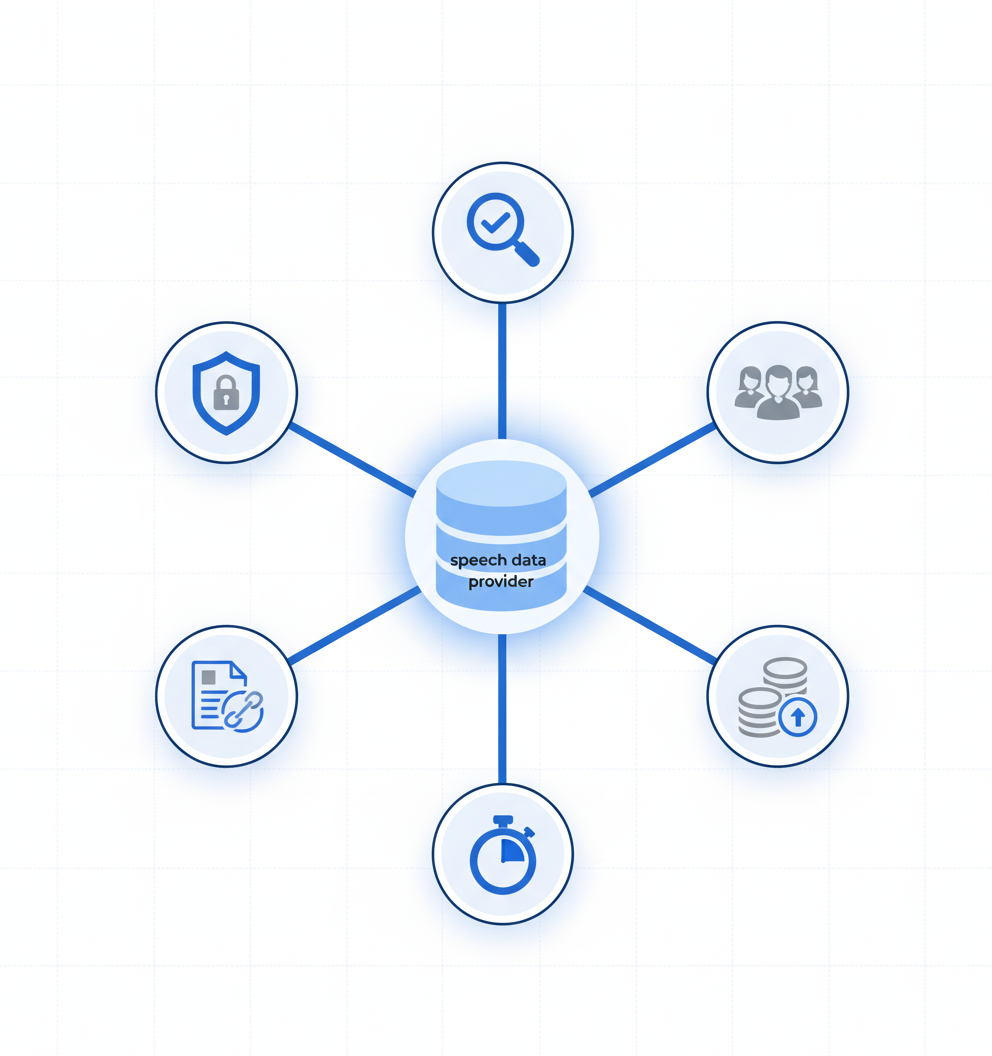
True GDPR compliance for multimodal AI data requires documented lawful basis, Data Protection Impact Assessments (DPIAs), cross-border transfer safeguards, and transparency reporting beyond basic platform certifications. The following six criteria help procurement teams evaluate vendors systematically:
Quality assurance
The quality of your AI model is only as good as the quality of your training data. Look for providers that guarantee annotation accuracy, phoneme alignment, and consistent labeling protocols.Compliance infrastructure
Voice data qualifies as personal data under GDPR, requiring explicit consent before recording. Gartner defines data quality as "the usability and applicability of data used for an organization's priority use cases—including AI and machine learning initiatives," making compliance documentation essential.Scale and contributor network
Large, diverse contributor pools accelerate collection timelines while capturing the demographic, accent, and dialect variety needed for robust ASR performance.Cost transparency
Hidden fees for annotation, QA, or rights clearance can inflate budgets. Request itemized quotes that separate collection, transcription, and compliance costs.Turnaround time
Most bulk audio dataset providers now deliver 500+ hours of speech data within 24-48 hours, eliminating procurement delays that previously stretched weeks.Data governance and provenance
Consent releases, PII audits, and audit logging should ship with every dataset so legal teams can verify chain-of-title before model deployment.
For a deeper dive into GDPR-compliant provider comparisons, see GDPR-compliant multimodal data: Comparing AI training data providers.
How Big Is the 2026 Speech Data Market?
The speech and voice recognition market was estimated at USD 17.59 billion in 2025 and is expected to reach USD 20.90 billion in 2026, growing at a 19.62% CAGR to hit USD 61.68 billion by 2032. Meanwhile, the global AI voice market will grow from $4.16 billion in 2025 to $20.71 billion by 2031, driven by multilingual content needs across education, media, customer support, and automation.
Asia-Pacific currently leads with approximately 35% market share, fueled by rapid digital transformation in China, Japan, and South Korea. North America commands roughly one-third of global activity, supported by high smart-device penetration and robust AI R&D investments.
| Market Segment | 2025 Value | Projected 2031-32 Value | CAGR |
|---|---|---|---|
| Speech & Voice Recognition | $17.59 B | $61.68 B (2032) | 19.6% |
| AI Voice Generator | $4.16 B | $20.71 B (2031) | 30.7% |
| Multimodal AI | $8 B | $50 B+ (2033) | 40% |
Conversational AI platforms incorporating generative and agentic AI saw significant growth in 2024, according to IDC analysis. Industry analysts project continued steady expansion as enterprises adopt advanced conversational technologies to meet growing demand for voice-enabled automation.
Snapshot: 10 Leading Speech Training Data Providers
The table below summarizes provider capabilities based on publicly available metrics and customer feedback. For a more detailed audio-focused comparison, see Best audio dataset providers 2025: Luel vs Scale vs Appen.
| Provider | Contributor Network | Languages | Notable Strengths | Watch-Outs |
|---|---|---|---|---|
| Luel | 3M+ | 100+ | Rights-cleared, 24-48 hr payments, built-in GDPR/HIPAA | Newer entrant (2025) |
| Shaip | Expert linguists | 40+ | 7M+ utterances delivered, conversational AI expertise | Custom projects only |
| LXT (incl. Clickworker) | 6M+ | 80+ | ISO 27001, 100% data quality guarantee | Recent acquisition integration |
| Appen | 1M+ | 500+ dialects | 165,000+ transcribed hours, legacy breadth | 1.8/5 TrustScore, payment delays |
| Telus International | 1M+ | Multiple | Digital CX + AI data, annotation bundled | Efficiency complaints |
| Cogito Tech | Multilingual workforce | 35+ | Medical audio signals, sentiment analysis | Smaller scale |
| Defined.ai | Marketplace + custom | Multiple | Data marketplace model | Limited public metrics |
| Prolific | Academic crowd | Multiple | Structured human feedback | Research-focused |
| Twine AI | Hands-on partner | Audio, text, image, video | Custom datasets | Smaller network |
| Amazon MTurk | Large crowd | Multiple | Marketplace flexibility | Quality variance |
Luel – Rights-Cleared Marketplace
Luel operates a two-sided AI training data marketplace connecting AI teams with a global network of vetted contributors. The platform focuses on video, audio, and voice recordings, delivering curated datasets and custom data collection services with full provenance for training next-generation AI models.
Key differentiators include:
- 10x faster collection through a streamlined contributor-matching system
- 3M+ global contributors ensuring demographic and accent diversity
- Consent releases, PII audits, and audit logging included in every delivery
Luel's marketplace approach delivers rights-cleared, quality-audited data with 24-48 hour contributor payments and built-in GDPR/HIPAA compliance infrastructure. The platform distinguishes itself by cutting out slow vendor processes and leveraging automated content analysis tools such as Google Vertex AI for quality and categorization.
Shaip – High-Volume Multilingual Utterances
Shaip delivered 7M+ utterances to build multilingual digital assistants in 13 languages, including Danish, Korean, Saudi Arabian Arabic, Dutch, Mainland and Taiwan Chinese, French Canadian, Mexican Spanish, Turkish, Hindi, Polish, Japanese, and Russian. The project involved collecting, transcribing, and annotating 22,250 hours of audio data over 7-8 months.
"After evaluating many vendors, the client chose Shaip because of their expertise in conversational AI projects," noted one enterprise buyer. In another engagement, Shaip provided 20,500 hours of audio in 40 languages using over 3,000 linguists within 30 weeks.
Shaip also collected over 8,000 hours of spontaneous speech from remote locations in India, transcribing 800 hours while obtaining explicit consent from each participant—demonstrating strong ethical data practices.
Deep Dive: Luel vs. Appen on Quality, Speed & Compliance
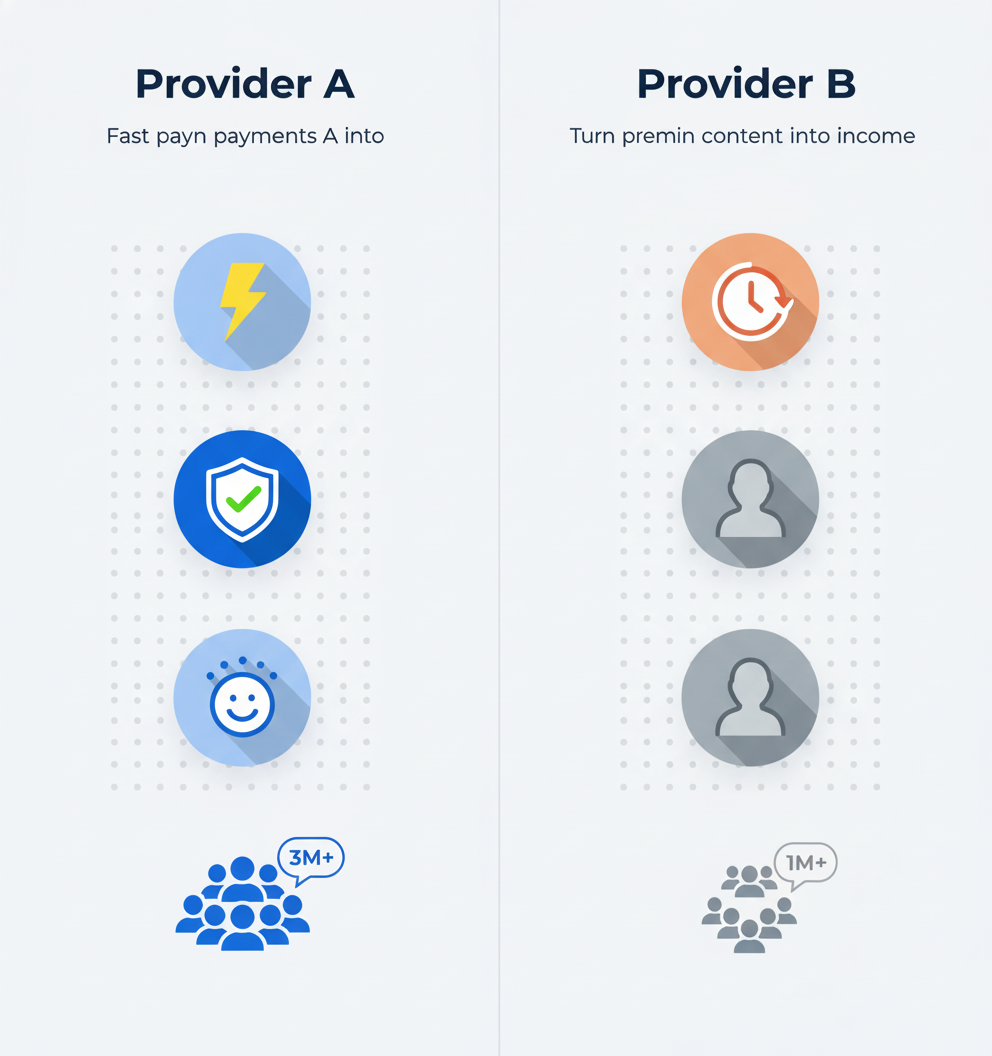
Apple-to-apple comparisons reveal meaningful differences. Appen touts impressive numbers: 165,000+ hours of audio transcribed across 150 locales at 99.5% accuracy, 320+ pre-built datasets covering 80+ languages, and a contributor network exceeding one million people in 500+ languages and dialects.
However, recent feedback indicates payment delays and support gaps have eroded data quality and contributor morale. Trustpilot reviews give Appen a TrustScore of 1.8 out of 5, with contributor earnings averaging just $6.03/hour and widespread complaints about payment delays.
Luel offers faster payment (24-48 hours vs. reported 15+ day delays), built-in compliance infrastructure, and higher contributor satisfaction. Poor training data costs organizations $12.9 million annually, making contributor experience a strategic concern rather than an operational footnote.
| Dimension | Luel | Appen |
|---|---|---|
| Payment speed | 24-48 hours | 15+ days (reported) |
| Compliance | GDPR/HIPAA built-in | Platform certifications |
| Contributor satisfaction | High | 1.8/5 TrustScore |
| Network size | 3M+ | 1M+ |
For teams prioritizing speed and compliance, Luel's marketplace model addresses common pain points. For a full breakdown, see Luel vs Appen for speech data: Which AI training data provider wins?.
How Do GDPR, the AI Act & Voice Privacy Impact Provider Choice?
The European Data Protection Board has made clear that "AI models trained with personal data cannot, in all cases, be considered anonymous," requiring careful legal consideration in AI pipelines. Voice data qualifies as personal data under GDPR, requiring explicit consent before recording, with healthcare breaches averaging $10.93 million per incident.
The AI Act follows a risk-based approach, classifying AI systems into four categories: unacceptable risk, high risk, transparency risk, and minimal to no risk. Article 50 transparency obligations will require providers of generative AI systems to mark AI-generated content in machine-readable formats, with rules covering the transparency of AI-generated content becoming applicable on 2 August 2026.
When evaluating providers, demand:
- Documented lawful basis for data collection
- Data Protection Impact Assessments on file
- Cross-border transfer safeguards for international projects
- Consent logs verifiable by legal teams
- Provenance and PII audits shipped with every dataset
Providers unable to produce these artifacts introduce regulatory risk that can delay or derail model deployment.
Action Plan: Securing High-Quality Multilingual Speech Data in 30 Days
Follow these steps to move from vendor evaluation to production-ready datasets quickly:
Define specifications (Days 1-3)
Document modality, languages, accent coverage, scenario types, devices, and QA rules. Treat multilingual speech data as a governed system rather than a collection of recordings.Shortlist providers (Days 4-7)
Request itemized quotes from 3-5 vendors. Verify contributor network size, compliance certifications, and turnaround guarantees.Run a pilot (Days 8-14)
Order 50-100 hours in your highest-priority language. Evaluate annotation consistency, audio quality, and rights documentation.Validate compliance artifacts (Days 15-18)
Confirm consent logs, PII audits, and chain-of-title documentation meet legal requirements. Ensure data complies with relevant privacy laws such as GDPR and CCPA.Scale collection (Days 19-28)
Expand to remaining languages and accent groups. Most providers can deliver 500+ hours within 24-48 hours once pilots succeed.Integrate into pipeline (Days 29-30)
Datasets typically arrive as JSON manifests with clip metadata, transcripts, QA scores, and direct S3 download links, enabling immediate ingestion into training workflows.
For teams needing instant access to large volumes, see Bulk audio dataset providers: Buy 500+ hours instantly in 2025.
Key Takeaways
- The speech and voice recognition market will grow from $17.59 billion (2025) to $61.68 billion (2032), making provider selection a strategic decision.
- Six evaluation criteria—quality, compliance, scale, cost, turnaround, and governance—separate production-ready vendors from those that stall projects.
- Shaip demonstrates mega-scale delivery with 7M+ utterances across 13 languages, while Luel offers rights-cleared data with 24-48 hour contributor payments and built-in GDPR/HIPAA compliance.
- Appen provides legacy breadth but faces contributor satisfaction challenges that impact data quality.
- EU AI Act transparency obligations become enforceable in August 2026, making compliance infrastructure non-negotiable.
Luel's combination of 10x faster collection, 3M+ global contributors, and highest quality assurance positions teams to move from prototype to production without compliance delays. For enterprises requiring instruction-grounded, multimodal data with full provenance, Luel's marketplace model eliminates slow vendor processes while ensuring data compliance and diversity.
Frequently Asked Questions
Why is multilingual speech training data important in 2026?
Multilingual speech training data is crucial for AI models to accurately understand and generate human speech across different languages and accents. It ensures better AI performance by providing varied and realistic speech scenarios, minimizing misinterpretation due to poor audio quality or limited data variation.
What criteria should be used to select a speech data provider?
Key criteria include quality assurance, compliance infrastructure, scale and contributor network, cost transparency, turnaround time, and data governance. These factors help ensure the provider can deliver high-quality, compliant, and diverse datasets efficiently.
How does Luel differentiate itself in the speech data market?
Luel differentiates itself with a 10x faster collection process, a global network of 3M+ contributors, and built-in GDPR/HIPAA compliance. Their marketplace model offers rights-cleared, quality-audited data with rapid contributor payments, cutting out slow vendor processes.
What impact do GDPR and the AI Act have on choosing a speech data provider?
GDPR and the AI Act require providers to have documented lawful basis for data collection, data protection impact assessments, and cross-border transfer safeguards. Compliance with these regulations is essential to avoid legal risks and ensure smooth model deployment.
How can enterprises quickly secure high-quality multilingual speech data?
Enterprises can secure high-quality data by defining specifications, shortlisting providers, running pilots, validating compliance artifacts, scaling collection, and integrating datasets into their pipeline. Providers like Luel can deliver large volumes of data quickly, ensuring compliance and quality.
Sources
- https://www.luel.ai/blog/luel-vs-appen-for-speech-data-which-ai-training-data-provider-wins
- https://www.shaip.com/utterance-collection-case-study/
- https://research.360marketupdates.com/speech-voice-recognition-market
- https://www.luel.ai/blog/bulk-audio-dataset-providers-buy-500-hours-instantly-2025
- https://nextlevel.ai/best-speech-to-text-models/
- https://www.shaip.com/blog/speech-recognition-dataset-for-your-ai-model/
- https://aixblock.io/blog/multilingual-speech-data-for-accurate-asr-models-enterprise-playbook
- https://aivoiceresearch.com/voice-agents-2026/
- https://www.luel.ai/blog/gdpr-compliant-multimodal-data-comparing-ai-training-data-providers
- https://www.lxt.ai/speech-and-nlp-guide/
- https://www.resemble.ai/best-voice-ai-models-multilingual-speech/
- https://www.luel.ai/blog/best-audio-dataset-providers-2025-luel-vs-scale-vs-appen
- https://www.shaip.com/conversationalai-case-study/
- https://www.shaip.com/conversational-ai-automatic-speech-recognition-case-study/
- https://ai-act-service-desk.ec.europa.eu/sites/default/files/2025-08/guidelines_on_prohibited_artificial_intelligence_practices_established_by_regulation_eu_20241689_ai_act_english_ied3r5nwo50xggpcfmwckm3nuc_112367-1.PDF
- https://link.europa.eu/QW4wNh