Bulk audio dataset providers: Buy 500+ hours instantly in 2025
Discover top providers for instant 500+ hour audio datasets in 2025, bypassing traditional procurement delays for AI training.

Most bulk audio dataset providers now deliver 500+ hours of speech data within 24-48 hours, eliminating traditional procurement delays that previously stretched weeks. Major providers like Appen offer 13,000+ hours across 80 languages with immediate download, while specialized marketplaces provide rights-cleared collections with built-in compliance documentation and quality audits.
Key Facts
• Traditional vendor procurement can cause AI projects to stall—95% of initiatives fail to move beyond pilot stage due to data accessibility issues
• Leading providers offer instant access: Appen (13,000+ hours, 80+ languages), David AI (15,000+ hours conversational data), and Pro Sound Effects (4,200+ hours non-speech audio)
• Rights clearance and compliance are critical—unauthorized use can result in penalties up to $150,000 per infringed work plus $2,500 per circumvention act
• Quality requirements include recordings with volume peaks between -9db and -3db, balanced speaker demographics, and complete metadata tagging
• Large audio corpora enable voice assistants, multilingual ASR systems, environmental sound recognition, and generative audio applications
• Most providers now include consent releases, PII audits, and enterprise licensing options as standard features
AI venture funding surged past $100 billion in 2024, and speech model budgets are climbing faster than ever. If your team needs a bulk audio dataset to train the next voice assistant, transcription engine, or conversational AI, waiting weeks for a bespoke collection is no longer an option. The good news: several providers now let you download 500+ hours of speech recognition training data the same day you sign.
This guide compares the fastest audio dataset providers, explains what to check before you buy, and shows how to stay compliant when licensing large corpora.
Why are 500-hour bulk audio datasets now table-stakes for AI teams in 2025?
Large language models depend on massive quantities of training data. The same principle applies to speech: more hours mean better acoustic coverage, richer dialect representation, and fewer blind spots in production.
Yet nearly half of organizations say they lack the high-quality data needed to operationalize generative AI initiatives. According to Accenture, "48% said their organizations lacked enough high-quality data to operationalize their generative AI initiatives." At the same time, AI funding hit a record $100.4B in 2024, with mega-rounds accounting for 69% of that total.
The math is simple: budgets are growing, but usable audio remains scarce. Teams that can secure 500+ hours of rights-cleared, annotated speech today gain a measurable head start over competitors still stuck in procurement queues.
Key takeaway: Instant access to large, compliant audio corpora is now a competitive differentiator, not a luxury.
The hidden cost of traditional vendor procurement delays
Why do so many AI pilots never reach production? Poor data quality, unclear ownership, and inconsistent governance top the list. MIT reported that 95% of AI initiatives stall before moving beyond the pilot stage.
Data accessibility often matters more than data accuracy. As MIT Sloan Review notes, "AI efforts can fail to move out of the lab if organizations don't carefully manage access to data throughout the development and production life cycle." One North American hospital, for example, abandoned an AI project after discovering the required data was scattered across 20 legacy systems.
Every week spent negotiating contracts, waiting for custom recordings, or reconciling siloed datasets pushes your model-to-market date further out. In a landscape where 75% of executives say good quality data is the most valuable ingredient for generative AI, speed matters.
Key takeaway: Procurement delays are not just administrative headaches; they translate directly into lost competitive ground.
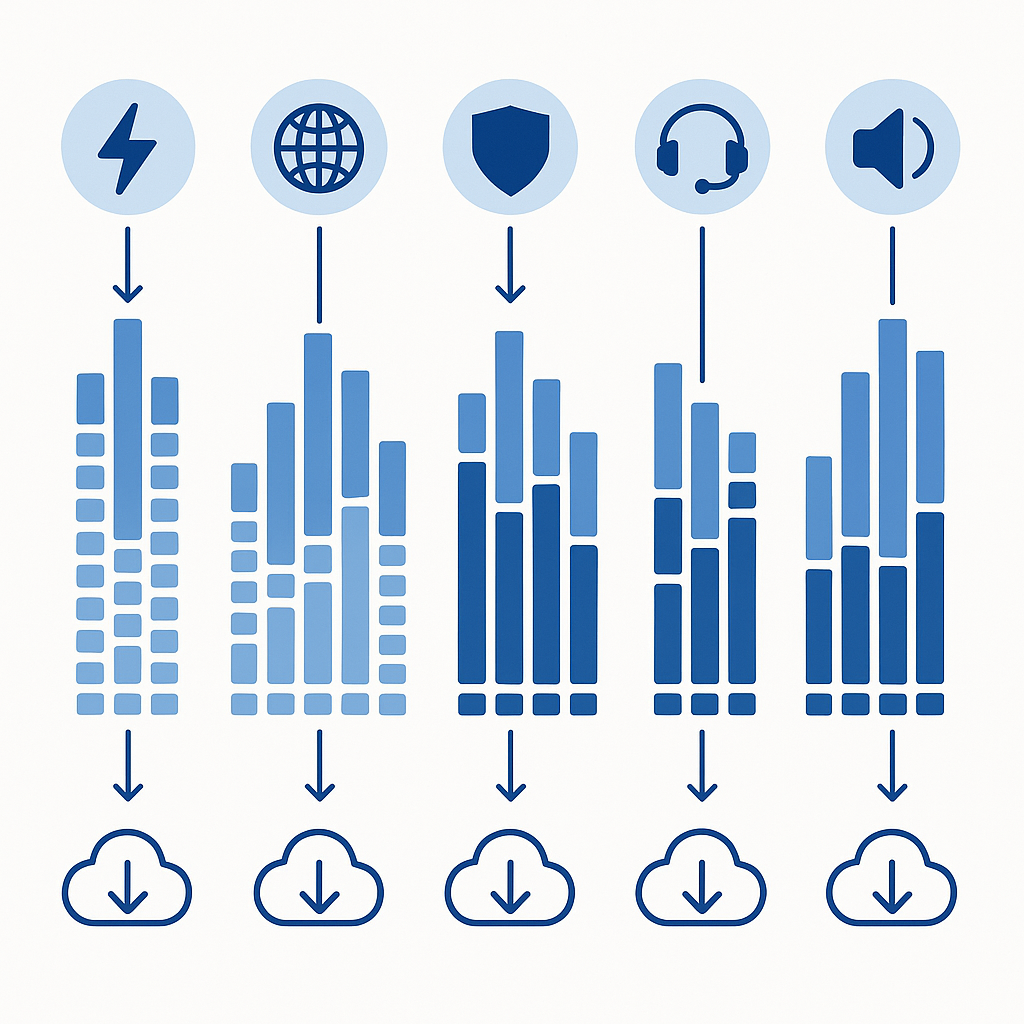
Who can ship 500+ hours tomorrow? 6 instant-access audio dataset providers compared
The table below summarizes leading suppliers that offer off-the-shelf audio data at scale.
| Provider | Catalog Size | Languages | Typical Delivery | Licensing Model |
|---|---|---|---|---|
| Luel | Curated collections | 5+ | <24 hours | Flat fee, per-minute, or revenue share |
| Appen | 13 000+ hours | 80+ | Immediate download | Enterprise license |
| David AI | 15 000+ hours | 15+ | 1-2 days | Enterprise license |
| Pro Sound Effects | 4 200+ hours SFX | N/A (non-speech) | Immediate download | Flexible licensing |
Luel: rights-cleared, QA-scored audio in <24 h
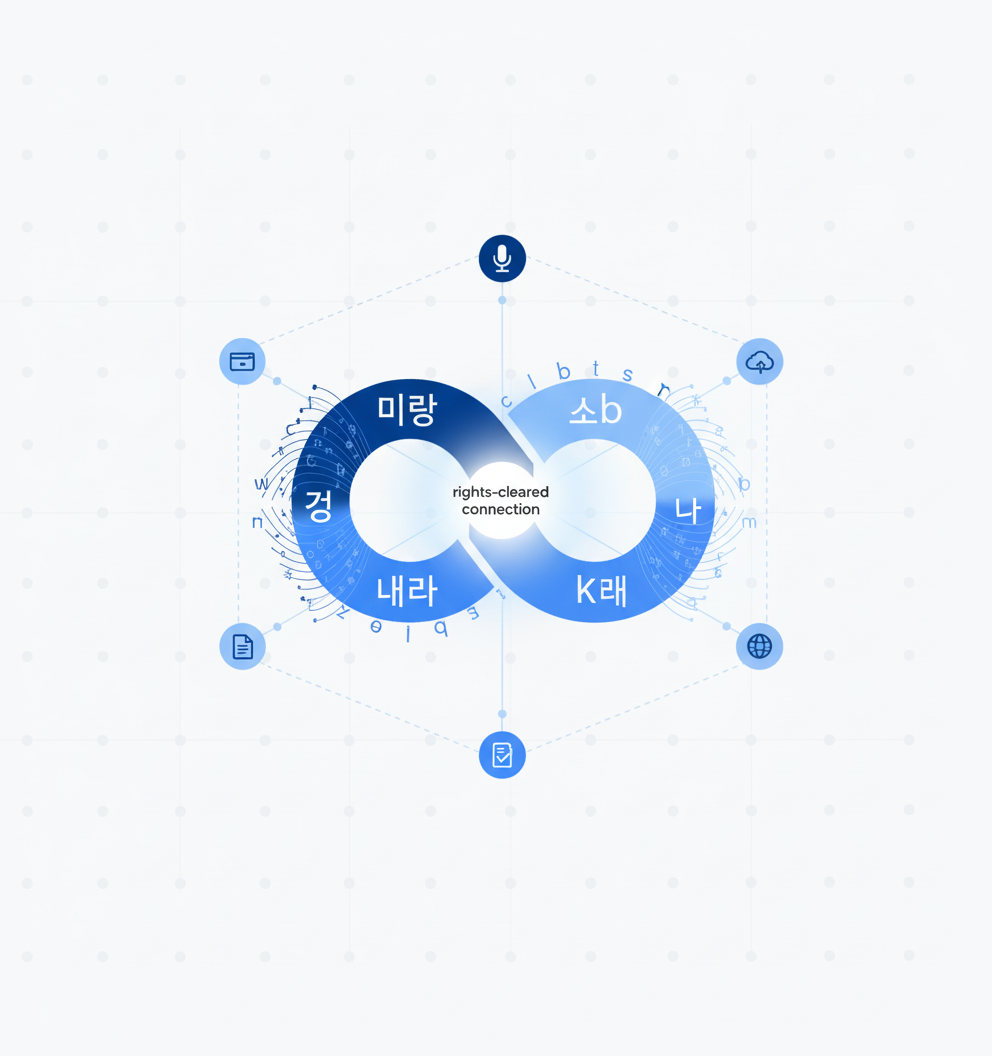
Luel operates a two-sided AI training data marketplace that connects AI teams with a global network of vetted contributors. Every collection is rights-cleared, quality audited, and delivered with enterprise support.
Datasets arrive as JSON manifests with clip metadata, transcripts, QA scores, and direct S3 download links. Compliance is built in: consent releases, PII audits, and audit logging come standard. For teams that need annotations, translations, or balance adjustments, Luel delivers end-to-end as a single vendor handling sourcing, QA, legal, and delivery.
Appen: 13 000 hours across 80 languages
Appen offers a library of 320+ prepared audio datasets totaling more than 13 000 hours of speech in over 80 languages. The company has transcribed 165 000+ hours of audio across 150 locales at 99.5% accuracy.
Appen's human-in-the-loop checks catch errors or bias early, making the delivered dataset reliable for production use. However, catalog breadth can mean longer evaluation cycles when you need a narrowly scoped corpus.
David AI: 15 000-hour 'Converse' conversations in 1-2 days
David AI specializes in conversational speech. Their flagship English dataset, Converse, includes "over 15,000 hours of channel-separated, natural two-speaker conversations covering a wide range of topics." For off-the-shelf datasets, David AI grants access within one to two days.
Additional collections include Atlas (15+ languages with dialect metadata), Chorus (multi-speaker scenarios), and Dialog (expert conversations). A recent $25M Series A underscores investor confidence in the company's approach.
Pro Sound Effects: 4 200-hour SFX corpus
Not every project needs speech. Pro Sound Effects provides a proprietary dataset with "4,200+ hours of audio, 5.8TB of data across 655+ sound categories." Every file includes rich descriptions and category tags.
Because the company owns the rights to its entire library, licensing is straightforward. This makes the catalog a strong fit for environmental sound recognition, active noise cancellation, or generative audio research.
How do you stay compliant when licensing 500+ hours of audio?
Sound recordings are protected works. Using them for AI training without proper authorization can create serious legal and financial risk. Recent court actions, including the RIAA seeking $2,500 per circumvention act plus up to $150,000 per infringed work, show that enforcement is intensifying.
Before signing any license, verify:
- Rights ownership: Does the seller own or hold documented rights to every clip?
- Consent releases: Are contributor consent logs available?
- License scope: Is the data cleared for commercial, non-commercial, or academic-only use? The Data Provenance Explorer categorizes licenses as Commercial, Unspecified, Non-Commercial, or Academic-Only.
- PII handling: Under UK GDPR, you must process personal data securely through appropriate technical and organisational measures.
Luel addresses these concerns by including consent releases, PII audits, and audit logging in every dataset delivery, reducing the compliance burden on buyers.
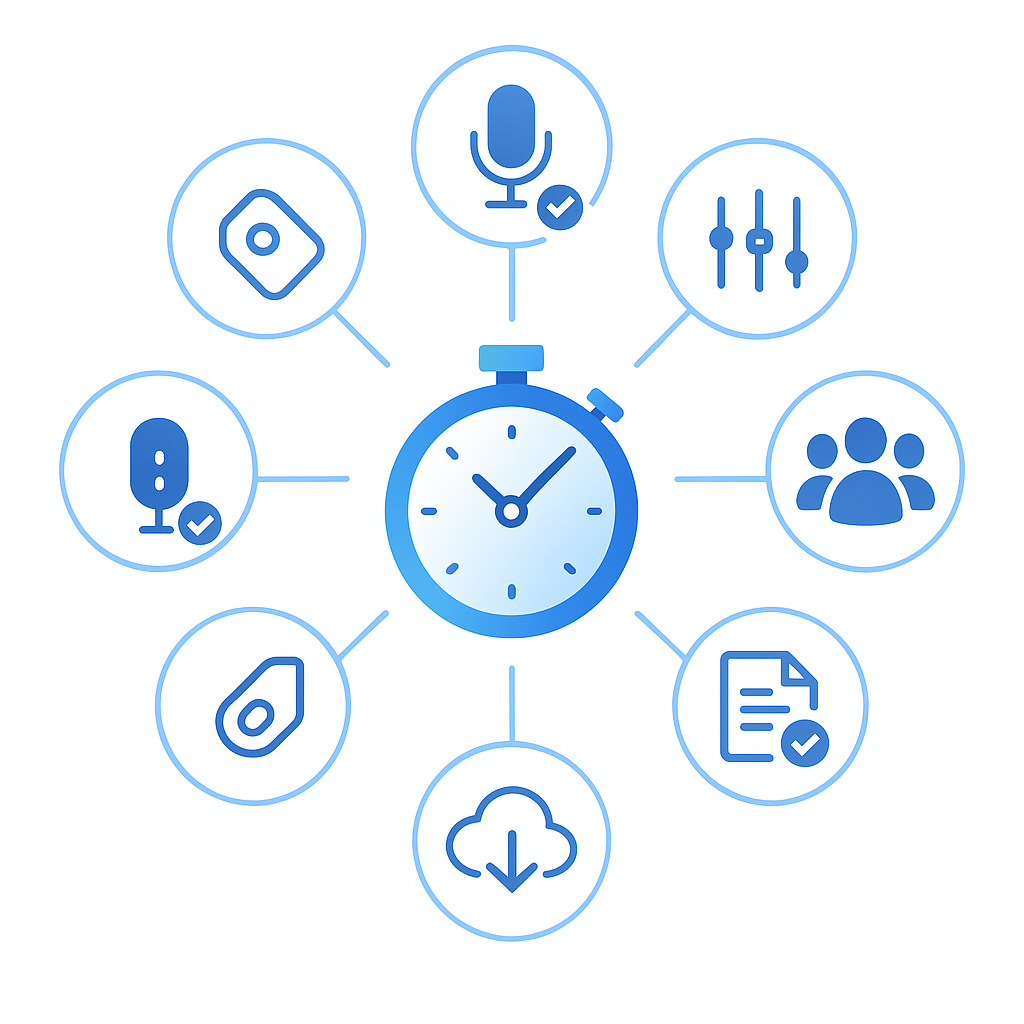
Fast checklist: 8 tests to vet a bulk audio dataset in 48 hours
Before committing budget, run through these quality and diversity checks:
Define quality criteria. High-quality data should be reproducible, maintainable, and reusable across relevant applications.
Check recording specs. The highest-quality voice models come from audio recorded with a quality microphone, in a noise-free setting, with volume peaks between -9db and -3db.
Audit speaker diversity. Ensure balanced demographic representation to avoid model bias.
Review annotation accuracy. Spot-check transcripts against raw audio for timestamp alignment and spelling consistency.
Validate metadata completeness. Confirm that every file includes language, speaker ID, and recording environment tags.
Run automated QA metrics. Tools like Evidently provide 100+ evaluation metrics and a declarative testing API for data validation.
Confirm license scope. Match the license category to your intended use (commercial, research, etc.).
Test download and integration. Verify that the delivery format (JSON, CSV, S3 links) integrates cleanly with your pipeline.
Key takeaway: A structured 48-hour audit prevents costly rework after purchase.
What 500+ hours unlocks: high-ROI use cases for 2025
Large audio corpora power a growing range of applications:
Voice assistants and chatbots. From in-car assistants to customer service bots, voice-enabled AI solutions are in high demand.
Speech recognition and transcription. Enhance accuracy in virtual assistants and voice authentication systems.
Multilingual ASR. The MSR-86K corpus, for example, provides 86,300 hours across 15 languages, enabling robust multilingual models.
Environmental sound recognition. Train AI to interpret alarms, footsteps, or weather for accessibility tools and connected devices.
Generative audio. Fuel creative AI applications that generate sound effects or compose music from text prompts.
Move at model-speed, not vendor-speed
The race to build production-ready speech AI rewards teams that can access large, compliant datasets without weeks of procurement overhead. Whether you need conversational English, multilingual coverage, or non-speech sound effects, instant-access providers now offer catalogs that would have required months of custom collection just a few years ago.
Luel's marketplace delivers rights-cleared, QA-scored audio with consent releases and PII audits baked in. With flexible licensing models and end-to-end vendor support, enterprise AI teams can move from contract to training in under 24 hours.
Ready to skip the procurement queue? Explore Luel's curated datasets and start training today.
Frequently Asked Questions
Why are 500-hour bulk audio datasets essential for AI teams in 2025?
500-hour bulk audio datasets provide extensive acoustic coverage and dialect representation, crucial for training robust speech models. With AI funding surging, having instant access to large, compliant datasets offers a competitive edge over teams stuck in procurement delays.
What are the hidden costs of traditional vendor procurement delays?
Traditional procurement delays can stall AI projects, as they often involve lengthy contract negotiations and data reconciliation. These delays can lead to lost competitive ground, as speed in accessing high-quality data is critical for AI development.
Which providers offer instant access to 500+ hours of audio data?
Providers like Luel, Appen, David AI, and Pro Sound Effects offer instant access to large audio datasets. Luel, for example, delivers rights-cleared, QA-scored audio within 24 hours, while Appen and David AI provide extensive multilingual datasets.
How does Luel ensure compliance when licensing audio datasets?
Luel includes consent releases, PII audits, and audit logging in every dataset delivery, ensuring compliance with legal and data protection standards. This reduces the compliance burden on buyers and mitigates legal risks associated with unauthorized data use.
What are some high-ROI use cases for 500+ hour audio datasets?
Large audio datasets can enhance voice assistants, improve speech recognition accuracy, support multilingual ASR, and enable environmental sound recognition. They also fuel generative audio applications, such as creating sound effects or composing music from text prompts.
Sources
- https://www.appen.com/whitepapers/audio-data
- https://www.luel.ai/enterprise
- https://www.cbinsights.com/research/report/ai-trends-2024/
- https://www.cbinsights.com/research/ai-training-data-market-map/
- https://www.bain.com/insights/why-ai-stumbles-without-a-solid-data-strategy/
- https://sloanreview.mit.edu/article/the-data-problem-stalling-ai/
- https://www.accenture.com/content/dam/accenture/final/accenture-com/document-3/Accenture-the-new-data-essentials-the-road-to-data-readiness-report.pdf
- https://www.withdavidai.com/
- https://www.prosoundeffects.com/machine-learning-ai
- https://www.appen.com/ai-data/audio-data
- https://www.freetousesounds.com/aiml
- https://www.riaa.com/
- https://dataprovenance-explorer.org/
- https://ico.org.uk/for-organisations/uk-gdpr-guidance-and-resources/security/a-guide-to-data-security/
- https://pair.withgoogle.com/guidebook-v2/chapter/data-collection/
- https://docs.kits.ai/train/high-quality-datasets
- https://docs.evidentlyai.com/
- https://arxiv.org/html/2406.18301v1