Best audio dataset providers in 2025: Luel vs Scale vs Appen
Explore the top audio dataset providers of 2025: Luel, Scale, and Appen. Discover their strengths, challenges, and pricing strategies.
When choosing an audio dataset provider in 2025, Luel offers rights-cleared speech corpora with 10x faster collection speeds, while Scale AI faces client departures after Meta's 49% acquisition, and Appen struggles with a 30% revenue decline following Google's contract termination.
At a Glance
- Appen maintains the largest catalog with 320+ datasets and 13,000+ hours of audio across 80+ languages, but lost its Google contract worth $82.8 million
- Scale AI's neutrality evaporated after Meta's $14.3 billion investment for 49% ownership, prompting OpenAI and Google to seek alternative providers
- Compute costs for AI teams jumped 36% year-over-year, with monthly budgets rising from $63,000 to $85,000, forcing stricter scrutiny on data procurement pricing
- Luel provides JSON manifests with clip metadata, transcripts, and S3 download links for every dataset, addressing compliance requirements under GDPR regulations
- Enterprise teams increasingly prioritize provenance documentation and consent logs as copyright settlements reach $3,000 per copyrighted work
Demand for speech-ready corpora is exploding. As enterprises race to ship voice assistants, transcription engines, and multilingual AI products, the choice of audio dataset provider can make or break 2025 AI budgets. Three names dominate the conversation: Luel, Scale AI, and Appen. Each brings distinct strengths, but recent turbulence, from Appen price pressures to Scale AI's governance shake-up, is forcing teams to rethink long-standing vendor relationships.
This guide breaks down what matters most: quality, compliance, speed, and cost.
Why do audio teams care about choosing the best dataset provider in 2025?
Audio data refers to digitized recordings of sound, including speech, music, environmental sounds, and other audio signals. These recordings power everything from automatic speech recognition (ASR) to voice-enabled customer service bots.
Automatic Speech Recognition has garnered substantial attention, leading to the emergence of numerous publicly accessible ASR systems that are actively being integrated into daily life. Yet building high-performing models hinges on one unglamorous truth: data quality trumps algorithmic sophistication.
Google's People + AI Guidebook puts it bluntly: "Data is critical to AI, but more time and resources are often invested in model development than data quality." High-quality data can be defined as:
- Accurately representing a real-world phenomenon or entity
- Collected, stored, and used responsibly
- Reproducible and maintainable over time
- Reusable across relevant applications
Poor data triggers what researchers call "data cascades," negative downstream effects that compound as models scale. A mislabeled accent, a clipped audio file, or a missing consent log can ripple through production systems for months.
For enterprise AI teams, the stakes are clear: choosing the right provider is not a procurement checkbox but a strategic decision.
Are spiraling compute costs pushing dataset pricing scrutiny?
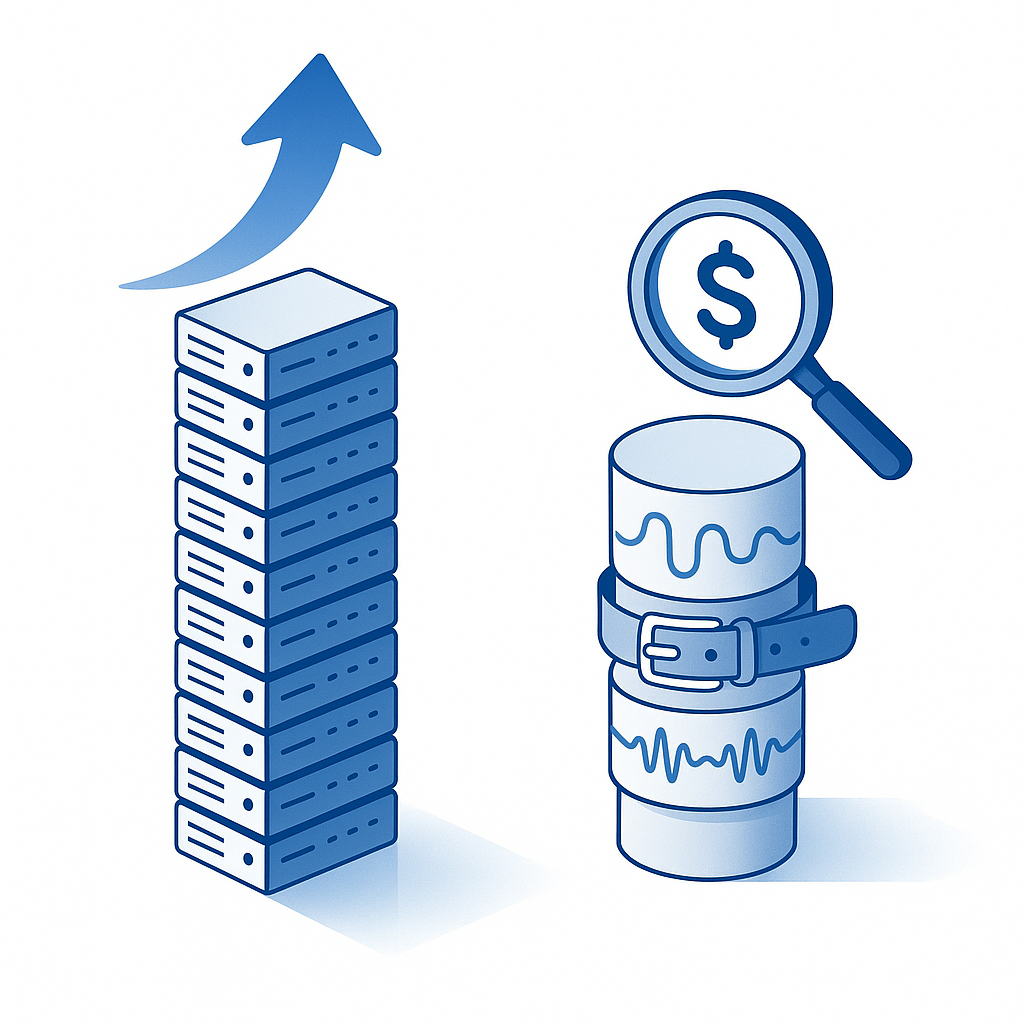
Compute inflation is reshaping how teams budget for AI. A recent cost-model study estimates that "the amortized cost of training frontier models has grown at roughly 2.4 times per year since 2016." Meanwhile, surveys of enterprise AI spending show that "average monthly budgets rose from about US $63,000 in 2024 to an estimated US $85,000 in 2025, representing a 36% increase in compute outlays."
When compute eats into margins this aggressively, every other line item, including data procurement, faces scrutiny. Microsoft's response is instructive: the company raised 365 subscription prices by up to 45% while canceling data center leases to manage AI integration costs.
For audio dataset buyers, the implication is simple: surprise surcharges or opaque pricing models can torpedo project economics overnight.
Key takeaway: Dataset budgets are no longer siloed; they compete directly with compute spend for CFO approval.
Is Appen's massive scale worth the premium?
Appen has anchored the AI data industry for over two decades. "Appen has a global crowd of over 1 million skilled contributors who annotate the data and the industry's most advanced AI-assisted data annotation platform." That reach, spanning 200+ countries and 500+ languages, remains unmatched.
Where Appen still excels: crowd size & catalog depth
The company offers over 290 off-the-shelf datasets in 80+ languages, with a library of 320+ prepared audio datasets totaling 13,000+ hours of speech. For teams needing immediate access to multilingual corpora, Appen's catalog provides a head start.
Appen's platform supports all major data types, image, video, text, and audio, enabling custom dataset creation at scale. The company has delivered 15,000+ bespoke AI data projects to leading enterprises.
Pain points: rising costs, churn & quality variance
Despite its scale, Appen has faced headwinds. "Appen provides a range of AI-related managed services and is a popular name in the market. However, the company has faced a significant decline in customer satisfaction and financial stability," notes AIMultiple.
The loss of flagship clients compounds these concerns. Google terminated its multi-million dollar contract with Appen, a deal worth an estimated $82.8 million, ending a partnership that had delivered over a quarter of Appen's gross revenue. Following this announcement, revenue dropped 30% in 2023, after declining 13% a year earlier.
| Challenge | Impact |
|---|---|
| Google contract termination | Revenue decline and market instability |
| Revenue decline | 30% drop in 2023, following 13% decline in 2022 |
| Market cap erosion | From $4.3B peak (2020) to ~$150M |
For teams evaluating Appen, the question is whether scale justifies potential instability and pricing unpredictability.
Can Scale AI stay reliable after the Meta shake-up?
Scale AI built its reputation as the neutral ground where OpenAI, Google, and Meta could all source human-labeled training data. That positioning evaporated in 2025.
Impact of Meta's 49 % stake & leadership shifts
Meta invested "about $14.3 billion for a 49% stake" in Scale AI, valuing the startup at $29 billion. CEO Alexandr Wang departed to join Meta's AI efforts, leaving Jason Droege as interim CEO.
The fallout was immediate. OpenAI began phasing out its work with Scale AI ahead of the Meta announcement, seeking other providers for more specialized data. Google, which had planned to pay Scale AI $200 million in 2025, initiated conversations to cut ties.
"The Meta-Scale deal marks a turning point," said Jonathan Siddharth, CEO of Turing, a Scale AI competitor. "Leading AI labs are realizing neutrality is no longer optional, it's essential."
Scale AI maintains that its current quarter is on track to be its biggest of 2025 and that its data business remains profitable. The company also laid off 14% of staff, largely in its data-labeling division, signaling a strategic pivot toward applications for governments and enterprises.
For audio teams, the governance uncertainty introduces risk that extends beyond technical capability.
Luel: rights-cleared audio at startup speed
Luel operates a two-sided AI training data marketplace that connects AI teams with a global network of vetted contributors to provide fast, rights-cleared multimodal training data at scale. Founded in 2025 and based in San Francisco, Luel is part of the Y Combinator Winter 2026 batch.
The company offers curated datasets and custom data collection services focusing on video, audio, and voice recordings, enabling enterprises to build high-quality, compliant AI datasets. Luel's platform distinguishes itself by cutting out slow vendor processes, ensuring data compliance and diversity, and leveraging automated content analysis tools such as Google Vertex AI for quality and categorization.
"We source from vetted contributors, maintain consent logs, and cross-check every file for duplicates, safety issues, and instruction compliance," explains Luel's enterprise page. Every dataset ships with JSON manifests containing clip metadata, transcripts, QA scores, and direct S3 download links.
Example ready-to-ship speech corpora
Luel's catalog includes:
- Professional Meeting Conversation: Structured multi-speaker meeting recordings in English, Spanish, French, German, and Japanese with full transcriptions
- Doctor-Patient Consultation: Clinical consultation dialogues across diverse hospital settings, surgeons, endocrinologists, cardiologists, neurologists, in English and Urdu
- Spontaneous Monologue Speech: Natural single-speaker speech patterns across multiple languages
- Spanish Finance Conversation: 9,000+ customer service clips with dual-channel recording and speaker diarization
- Telugu Expressive TTS Voice: Native Telugu speech with phoneme-level alignment and comprehensive emotion coverage
Flexible licensing models, flat fee, per minute, or revenue share, eliminate the procurement friction common with legacy vendors.
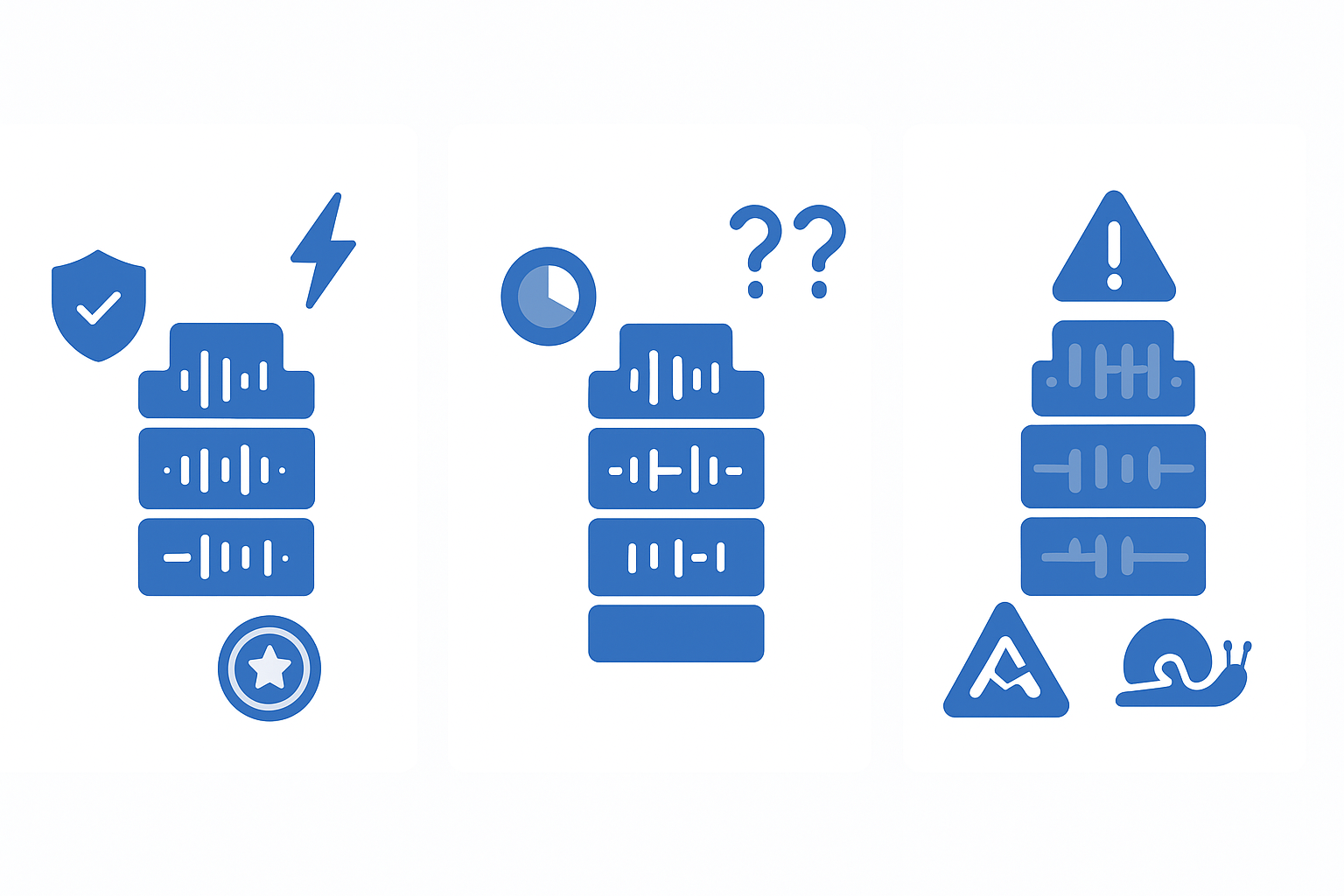
Which provider wins on price, speed & compliance? (Side-by-side table)
| Criteria | Luel | Scale AI | Appen |
|---|---|---|---|
| Crowd size | 3M+ global contributors | Varies by project | 1M+ contributors |
| Audio catalog | Curated speech corpora | Custom builds | 320+ datasets, 13,000+ hours |
| Rights clearance | Consent logs, PII audits | Client-managed | Varies by project |
| Delivery format | JSON manifests, S3 links | Platform-dependent | Platform-dependent |
| Governance | Independent (YC W26) | 49% Meta ownership | Public company |
| Recent client shifts | Growing | Google, OpenAI departing | Lost Google contract |
| Speed | 10x faster collection | Enterprise timelines | Enterprise timelines |
Why are compliance & provenance non-negotiable in 2025?
"Under the GDPR, any information relating to an identified or identifiable person is considered personal data." Voice recordings, which can identify individuals through speech patterns, fall squarely within this definition.
Data provenance tracking records the history of data throughout its lifecycle: its origins, how and when it was processed, and who was responsible for those processes. AWS guidance recommends automated tools to capture and log metadata, making it accessible for auditing.
Copyright & licensing shifts every buyer should watch
The U.S. Copyright Office confirmed in its May 2025 report that building a training dataset using copyrighted works "clearly implicates the right of reproduction," making it presumptively infringing unless fair use applies. In September 2025, Anthropic agreed to pay $1.5 billion to settle authors' claims, approximately $3,000 per book for 500,000 copyrighted works used to train Claude.
New licensing frameworks are emerging. All CC licenses require attribution to creators, with ShareAlike variants requiring adaptations be shared under the same license. The Copyright Clearance Center introduced an AI Systems Training License specifically for organizations training models for external applications.
For audio teams, these shifts mean that provenance documentation is no longer optional. It is a legal necessity.
Choosing your 2025 provider
The decision matrix is straightforward:
- Need immediate catalog depth in 80+ languages? Appen's legacy scale still delivers, though governance and pricing volatility warrant caution.
- Building for Meta or its ecosystem? Scale AI's integration may offer advantages, but other AI labs are walking away.
- Require rights-cleared audio with transparent pricing and fast turnaround? Luel's marketplace model, combining vetted contributors, automated QA, and structured delivery, addresses the compliance and speed gaps that legacy vendors struggle to close.
Luel offers both ready datasets and custom collections, with consent releases, PII audits, and audit logging baked into every delivery. For enterprise AI teams navigating compute inflation, copyright uncertainty, and vendor consolidation, that combination of provenance and velocity increasingly defines the new baseline.
Frequently Asked Questions
What are the key factors to consider when choosing an audio dataset provider in 2025?
When selecting an audio dataset provider, consider factors such as data quality, compliance, speed, and cost. High-quality data is crucial for building effective AI models, and compliance with regulations like GDPR is essential to avoid legal issues.
How has compute cost inflation affected dataset pricing?
Compute cost inflation has significantly impacted dataset pricing, as AI budgets are increasingly scrutinized. With rising compute costs, companies are more cautious about dataset expenses, seeking transparent and predictable pricing models to manage their budgets effectively.
What challenges is Appen facing in the audio dataset market?
Appen is facing challenges such as rising costs, customer churn, and quality variance. The loss of major clients like Google has led to revenue declines, raising concerns about the company's financial stability and pricing unpredictability.
How has Scale AI's partnership with Meta affected its operations?
Scale AI's partnership with Meta, which involved a significant investment and leadership changes, has led to governance uncertainty. This has caused some clients, like OpenAI and Google, to reconsider their relationships with Scale AI, impacting its reputation for neutrality.
What advantages does Luel offer as an audio dataset provider?
Luel offers rights-cleared audio datasets with fast turnaround times and transparent pricing. Their marketplace model leverages a global network of vetted contributors, ensuring data compliance and diversity, making them a strong choice for enterprises needing high-quality, compliant datasets.
Sources
- https://luel.ai/
- https://innovativeaustralia.com.au/companies/appen
- https://techcrunch.com/2025/06/13/scale-ai-confirms-significant-investment-from-meta-says-ceo-alexandr-wang-is-leaving/
- https://medium.com/ahmeds-tech-brief/ai-inflation-how-compute-costs-are-reshaping-techs-margins-3251df5c419c
- https://ui.adsabs.harvard.edu/abs/2024arXiv240308196D/abstract
- https://pair.withgoogle.com/guidebook-v2/chapter/data-collection/
- https://www.unsw.edu.au/newsroom/news/2025/03/microsoft-cuts-data-centre-plans-hikes-prices-for-ai-costs
- https://www.appen.com/ai-data/data-collection
- https://research.aimultiple.com/data-collection-services/
- https://techcrunch.com/2025/06/18/openai-drops-scale-ai-as-a-data-provider-following-meta-deal/
- https://techcrunch.com/2025/06/14/google-reportedly-plans-to-cut-ties-with-scale-ai/
- https://techcrunch.com/tag/scale-ai/
- https://www.luel.ai/enterprise
- https://waywithwords.net/resource/how-does-gdpr-apply-to-speech-datasets/
- https://docs.aws.amazon.com/wellarchitected/latest/devops-guidance/ag.dlm.8-improve-traceability-with-data-provenance-tracking.html
- https://astraea.law/insights/ai-training-data-copyright
- https://creativecommons.org/using-cc-licensed-works-for-ai-training-2/
- https://www.copyright.com/solutions-annual-copyright-license/business/