Rights-cleared TTS data: AI training data providers for English-Korean
Explore rights-cleared TTS data providers for English-Korean AI, focusing on compliance and licensing challenges in multilingual markets.
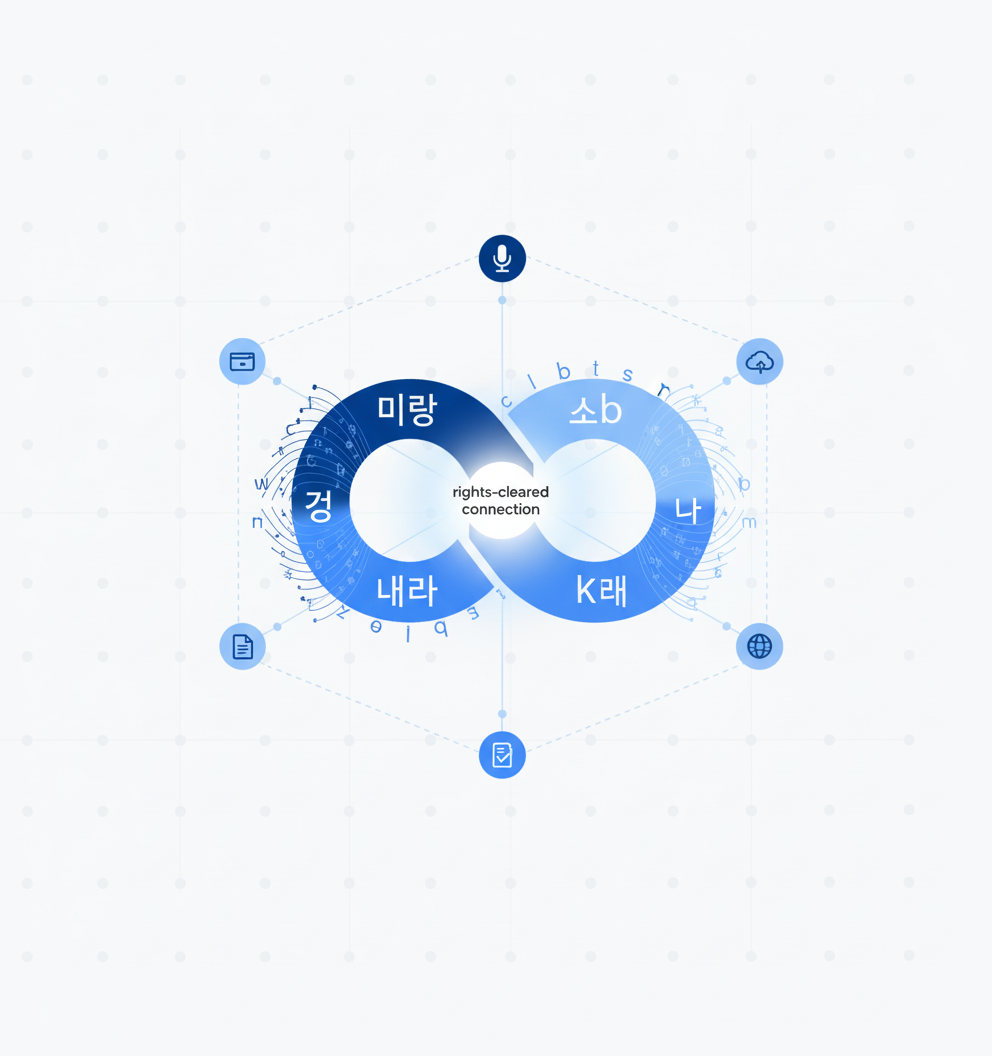
Most English-Korean TTS datasets lack documented commercial licensing, with only four verified providers offering rights-cleared data: FutureBeeAI (30 hours), DataoceanAI (26.84 hours), Shaip, and Protege. The shortage creates compliance risks as regulatory fines exceeded $5 billion in 2024, while GDPR and Korea's PIPA require explicit performer consent and commercial usage rights before AI training begins.
TLDR
- Rights-cleared TTS data requires documented performer consent, explicit commercial licensing, and verifiable provenance for legal AI deployment
- Only 4 providers offer verified commercial Korean TTS datasets: FutureBeeAI (30 hours, 30 speakers), DataoceanAI (26.84 hours, 99.5% accuracy), Shaip, and Protege
- The global TTS market will reach $7.5 billion by 2033, but Korean speech data supply lags demand
- Compliance requires meeting both GDPR and Korean PIPA standards, with voice recordings qualifying as personal data under both frameworks
- Many Korean datasets carry academic-only licenses (CC-BY-NC-SA) that prohibit commercial use regardless of technical quality
- Verify four pillars before procurement: lawful basis documentation, Data Protection Impact Assessments, cross-border transfer safeguards, and transparency reporting
Rights-cleared TTS data is the bedrock of scalable, multilingual voice experiences. For teams building English-Korean speech synthesis systems, finding datasets with documented commercial licensing has become unexpectedly difficult. Most voice AI models are trained on English-only datasets, which limits their real-world utility in diverse, multilingual markets. The post-2025 TTS boom has magnified compliance risks: regulatory fines for non-compliance exceeded $5 billion globally in 2024, and voice AI systems face increased scrutiny under GDPR, Korea's PIPA, and emerging voice cloning statutes. This guide unpacks which providers actually offer rights-cleared English-Korean TTS data, what laws govern this space, and how to verify vendor claims before you sign.
Why Rights-Cleared TTS Data Matters for English-Korean AI
What is rights-cleared TTS data? It is speech audio you can legally use, adapt, and commercialize because the provider secured performer consent and explicitly transfers usage rights. Without these documented permissions, AI teams risk legal exposure that can halt entire projects.
Comparing GDPR-compliant multimodal data providers reveals significant transparency gaps between vendor claims and documented compliance. The English-Korean language pair intensifies this challenge: most TTS resources focus on English, leaving Korean speech datasets in short supply with unclear licensing.
FutureBeeAI's 30-hour Korean monologue set ships under a written commercial licence with signed speaker contracts and a minimum 30 dB SNR, eliminating downstream legal risk. This stands in contrast to many academic datasets where usage terms remain undefined or explicitly non-commercial.
The stakes are high: 75% of the global population will have personal data covered under privacy regulations by 2024, making vendor transparency essential. For bilingual English-Korean projects, the licensing gap is not just an inconvenience; it is a fundamental barrier to compliant AI development.
Key takeaway: Rights-cleared TTS data requires documented performer consent, explicit commercial licensing, and verifiable provenance before any AI training begins.
Market Surge & Data Demand for Bilingual Speech Synthesis
The global Text-to-Speech software market is projected to reach a valuation of USD 7.5 billion by 2033, growing at a compound annual growth rate of 14.2% from 2025 to 2033. Neural TTS is at the forefront of this segment, offering significant advancements in speech synthesis quality.
This expansion is not evenly distributed. The Text-to-Speech Market is projected to grow by USD 9.77 billion at a CAGR of 10.43% by 2032, with the base year valuation at USD 4.42 billion in 2024. The Asia Pacific region is expected to experience the highest growth rate, fueled by the rapid digitalization and increasing demand for multilingual support.
The text-to-speech market size will grow from $4.15 billion in 2024 to $4.92 billion in 2025 at a CAGR of 18.4%, accelerating through 2029 at 18.5%. This surge creates intense demand for Korean speech datasets that can support commercial deployment.
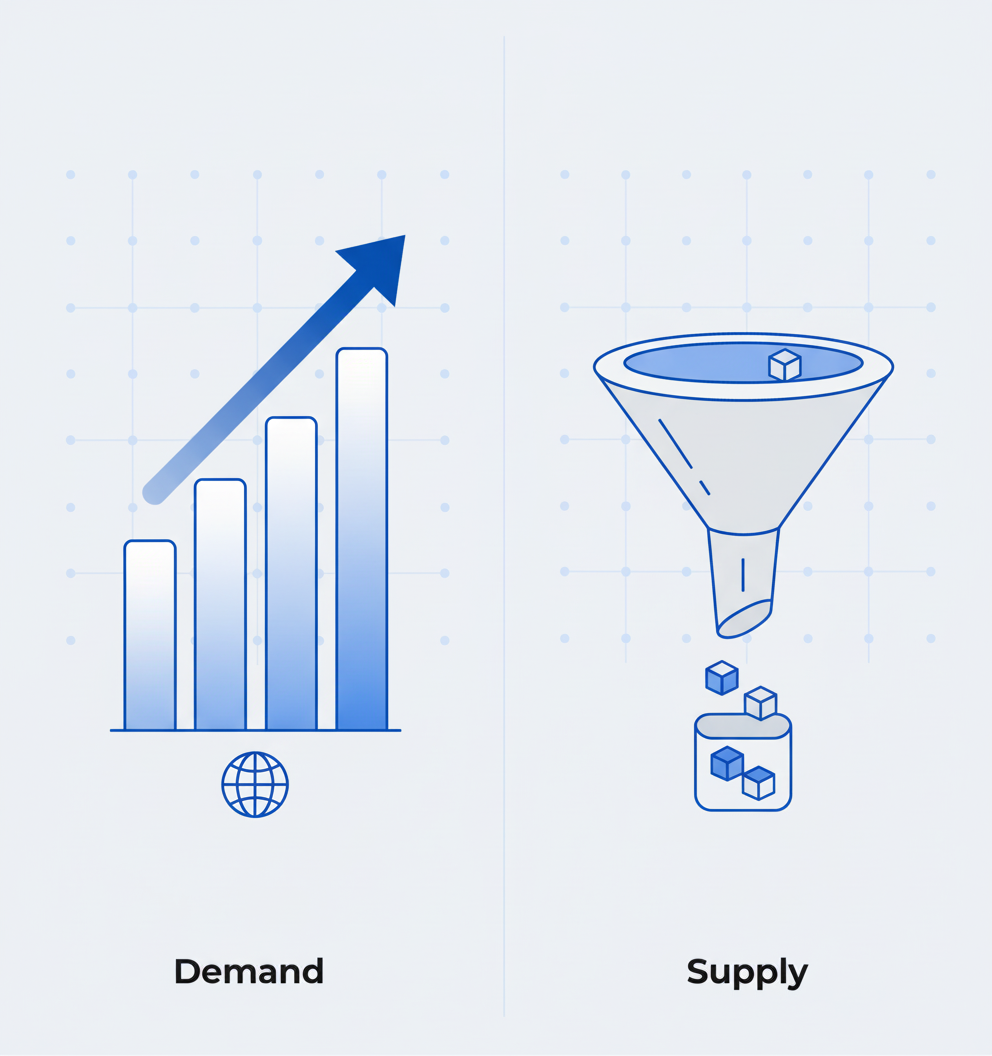
Supply lags demand. While enterprises race to deploy bilingual voice experiences, the pool of properly licensed Korean TTS data remains shallow. Neural approaches and end-to-end models are raising quality expectations, but the underlying training data often lacks the documentation required for lawful commercial use.
Key takeaway: Market growth outpaces the supply of rights-cleared Korean TTS data, creating compliance bottlenecks for AI teams targeting bilingual applications.
Which Laws Govern English-Korean Voice Licensing?
Voice data collection spans multiple regulatory frameworks. GDPR violations carry penalties up to 4% of global annual revenue, while South Korea's Personal Information Protection Act (PIPA) imposes additional compliance requirements that align with but extend beyond GDPR standards.
Under the GDPR, voice recordings that can identify a person qualify as personal data. Consent must be freely given, specific, informed, and unambiguous. Article 32 mandates that organisations implement appropriate technical and organisational measures, such as encryption, pseudonymisation, and strict access controls.
South Korea has moved aggressively on voice cloning. The AI Identity Protection Act (2025) requires companies to store verifiable consent logs and allow users to revoke voice usage authorization. This creates a dual compliance burden for English-Korean projects: you must satisfy both EU and Korean requirements.
The regulatory landscape continues to evolve. The Federal AI Voice Act in the US (enforced 2026) requires explicit written consent for commercial use of synthetic voice models derived from real individuals. The EU has integrated voice cloning under the Artificial Intelligence Regulation, complementing GDPR with specific provisions for synthetic media.
For teams sourcing Korean TTS data, the practical implication is clear: GDPR compliance alone is insufficient. You need documented consent that meets Korean PIPA standards and anticipates emerging voice cloning statutes.
For deeper analysis of compliance requirements, see our guide on GDPR-compliant multimodal data providers.
Which Providers Actually Offer Rights-Cleared English-Korean TTS?
The critical question for AI teams is whether a provider can produce written commercial licenses. Our analysis reveals that most providers lack documented commercial licensing for Korean speech data.
Providers with Written Commercial Licenses
A select group of providers offer datasets with explicit commercial licensing:
FutureBeeAI: The Korean TTS Monologue Speech Dataset includes 30 hours of studio-recorded speech by 30 native Korean speakers, available exclusively under a commercial license with signed speaker contracts.
DataoceanAI: The Korea Korean Multi-speaker Speech Synthesis Corpus provides 26.84 hours from 29 speakers with 99.5% phonetic labeling accuracy, recorded in professional studio conditions.
Shaip: Offers high-quality Korean call-center conversations, scripted monologues, and media datasets with documented commercial licensing for ASR, TTS, and language modeling applications.
Protege: Operates with built-in safeguards including structured licensing, clear data provenance, and privacy-by-default standards, with hundreds of thousands of hours across 70+ languages.
Open-Source Models with Explicit MIT/Apache Terms
For teams comfortable with open-source licensing, several Korean TTS projects offer clear commercial terms:
MeloTTS (MyShell.ai): A high-quality multi-lingual text-to-speech library under the MIT License, free for both commercial and non-commercial use.
Dia 1.6B TTS (Nari Labs): A 1.6 billion parameter model released under Apache 2.0 license, allowing free use for personal and commercial purposes with multi-speaker dialogue generation and voice cloning capabilities.
Orpheus-3b-Korean-FT: Available under the Apache License 2.0, offering natural emotional speech synthesis with Korean-specific voice options.
Datasets with Restricted or Undefined Terms
Many Korean speech datasets carry licensing restrictions that preclude commercial use:
Snow Mountain TTS Corpus: Built using NIA's AI Hub scripts, this dataset permits use only for personal research, non-commercial purposes, and academic research. Redistribution or commercial use without permission is prohibited.
KoSp2E (Korean Speech to English Translation Corpus): Contains multiple subcorpora with varying licenses. The KSS dataset uses CC-BY-NC-SA 4.0, explicitly excluding commercial applications.
Key takeaway: Verify license terms before procurement. Academic-only licenses like CC-BY-NC-SA cannot support commercial AI deployment regardless of technical quality.
What Licensing Red Flags Cause Industry Blow-Ups?
The Netflix German dubbing boycott illustrates what happens when AI voice clauses lack proper documentation. German voice actors launched a boycott against Netflix due to contract clauses allowing voice recordings for AI training without compensation. The disputed contracts omitted specific remuneration for AI usage because there were no reference points for fair market value.
Legal reviews highlighted potential violations of copyright law and GDPR, with attorneys advising actors against signing. As German attorney Ines Duhanic stated on LinkedIn: "I see this as a critical moment for European 'Droit d'auteur' traditions to stand their ground against aggressive 'Copyright' expansion… The stance of the professional associations is clear: They are creators, not data sources."
Platform terms also create exposure. Silencio's Voice AI Participation Terms state that the platform may anonymize, pseudonymize, aggregate, or combine Voice Data without restriction, and users irrevocably waive all moral rights. The company is not required to delete data already anonymized, aggregated, or incorporated into trained models.
Using a cloned voice without proper authorization can trigger claims related to personality rights, misappropriation, or deceptive use. The SAG-AFTRA strike involved roughly 160,000 actors, with AI voice and likeness rights emerging as a central point of dispute.
Key takeaway: Missing consent clauses, undefined AI usage terms, and waived moral rights are red flags that can derail projects and trigger regulatory action.
A Four-Pillar Checklist to Verify "Rights-Cleared" Claims
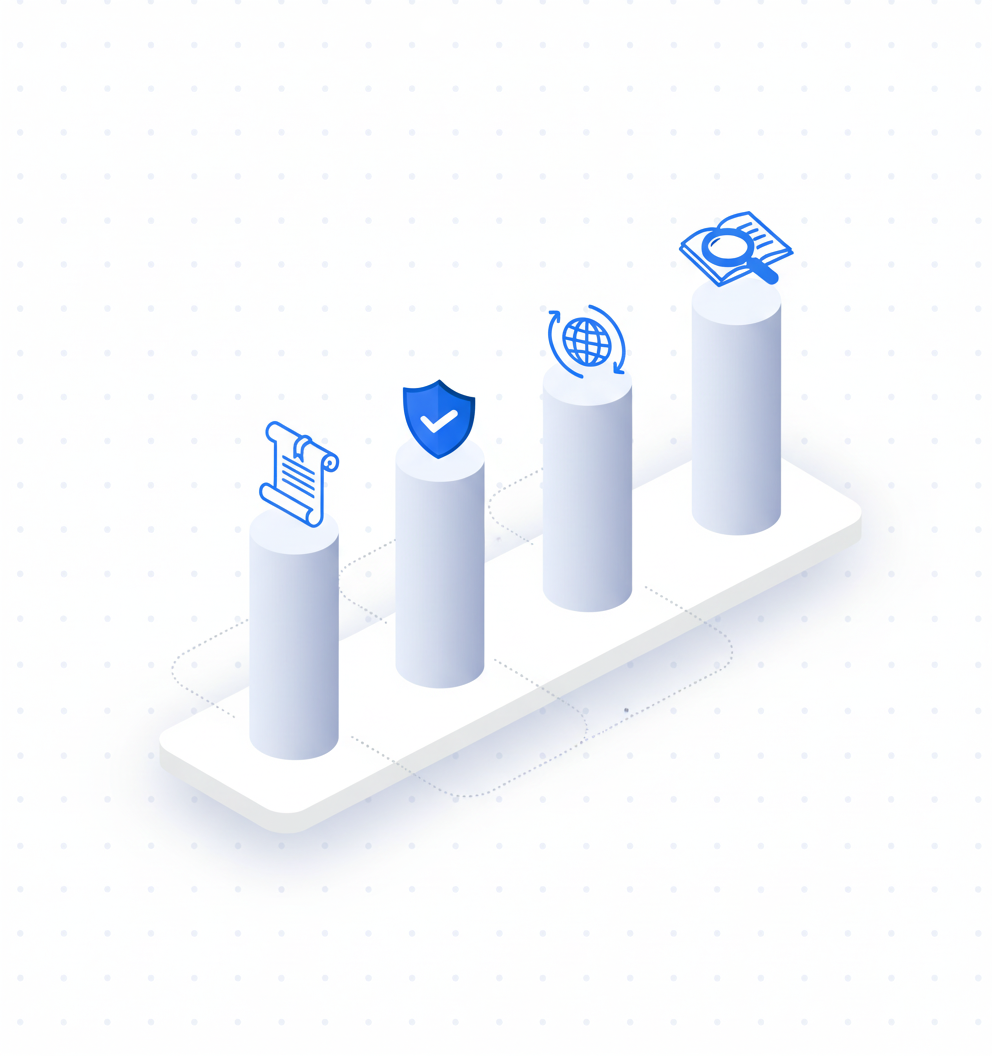
Buyers should evaluate data providers against four fundamental pillars: lawful basis documentation, Data Protection Impact Assessments, cross-border transfer safeguards, and transparency reporting.
| Pillar | What to Request | Red Flag |
|---|---|---|
| Lawful Basis Documentation | Performer consent contracts with specific AI training permissions | Vague "all rights" language without AI specificity |
| Data Protection Impact Assessments | Completed DPIAs covering voice biometric processing | No DPIA available or "in progress" indefinitely |
| Cross-Border Transfer Safeguards | Standard Contractual Clauses or adequacy decisions for data flows | Data stored in jurisdictions without EU adequacy |
| Transparency Reporting | Audit trails showing consent collection and scope | Refusal to provide consent documentation samples |
GDPR requires documented legal grounds before processing any voice recordings. TCPA violations range from $500-$1,500 per call without proper consent. For Korean data, also verify compliance with PIPA's stricter biometric data provisions.
Practical verification steps:
- Request sample consent forms used during data collection
- Ask for DPIA summaries or executive reports
- Confirm data storage locations and transfer mechanisms
- Review audit trail capabilities for consent verification
For detailed compliance frameworks, see our GDPR-compliant multimodal data comparison.
How Luel Accelerates Compliant English-Korean Voice Data Collection
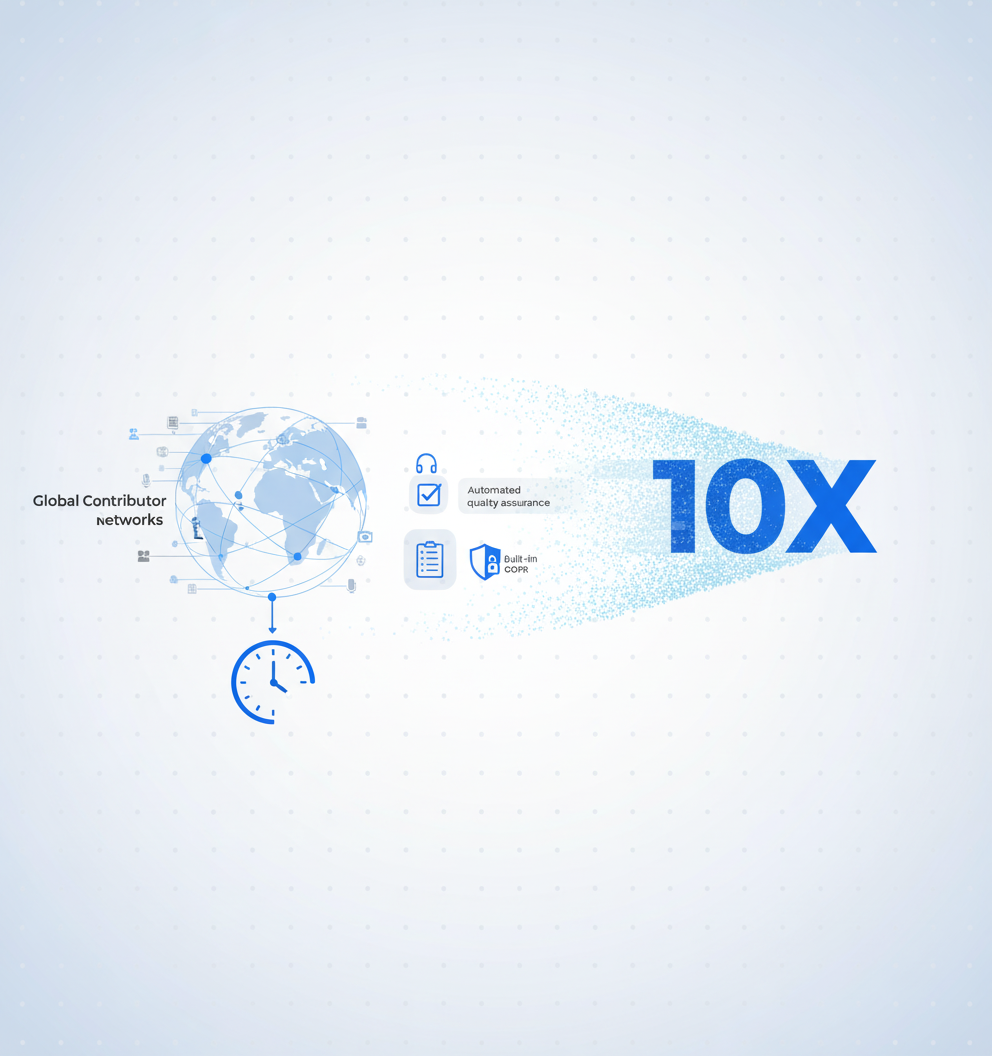
Luel operates a two-sided AI training data marketplace connecting AI teams with a global network of vetted contributors. The platform distinguishes itself through 10x faster collection, a 3M+ global contributor network, and documented compliance with full provenance.
For English-Korean TTS projects, Luel addresses the core licensing gap by building rights documentation into the collection process. Unlike retrofitted compliance approaches, contributor consent and commercial licensing are established before recording begins.
The platform operates with structured licensing, clear data provenance, and privacy-by-default standards across all data sources. This approach aligns with the compliance requirements now standard for voice AI: documented lawful basis, cross-border transfer safeguards, and transparency reporting.
For teams facing the English-Korean TTS data shortage, Luel's custom collection services provide an alternative to grey-area datasets with uncertain licensing.
Key Takeaways for 2026 and Beyond
The rights-cleared TTS landscape for English-Korean remains challenging. Most providers lack documented commercial licensing, creating compliance exposure for AI teams.
The European Data Protection Board has made clear that "AI models trained with personal data cannot, in all cases, be considered anonymous." This guidance applies directly to voice data: training on improperly licensed recordings creates liability that persists in the deployed model.
Four actions to prioritize:
- Audit existing Korean TTS datasets for documented commercial licenses
- Verify consent mechanisms meet both GDPR and Korean PIPA requirements
- Evaluate providers against the four-pillar compliance framework
- Consider custom collection with built-in rights documentation for critical projects
The market will continue to grow. The teams that build compliant data foundations now will scale without the legal exposure that slows competitors.
For comprehensive guidance on compliant AI data sourcing, explore our GDPR-compliant multimodal data provider comparison.
Frequently Asked Questions
What is rights-cleared TTS data?
Rights-cleared TTS data refers to speech audio that can be legally used, adapted, and commercialized because the provider has secured performer consent and explicitly transferred usage rights. This ensures AI teams avoid legal risks associated with undocumented permissions.
Why is rights-cleared TTS data important for English-Korean AI projects?
Rights-cleared TTS data is crucial for English-Korean AI projects to ensure compliance with international regulations like GDPR and Korea's PIPA. Without proper licensing, AI teams face legal exposure that can halt projects, especially in multilingual markets.
Which providers offer rights-cleared English-Korean TTS data?
Providers like FutureBeeAI, DataoceanAI, Shaip, and Protege offer rights-cleared English-Korean TTS data with explicit commercial licensing. These providers ensure compliance by securing performer consent and providing documented licenses.
What are the compliance challenges in sourcing Korean TTS data?
Sourcing Korean TTS data involves navigating complex regulatory frameworks like GDPR and Korea's PIPA. Compliance challenges include securing documented consent, ensuring lawful data processing, and meeting dual compliance requirements for voice data.
How does Luel address the licensing gap in English-Korean TTS data?
Luel accelerates compliant English-Korean voice data collection by integrating rights documentation into the data collection process. Their platform ensures structured licensing, clear data provenance, and privacy-by-default standards, addressing the core licensing gap.
Sources
- https://www.futurebeeai.com/dataset/speech-dataset/tts-monolgue-korean-southkorea
- https://salesix.ai/blogs/Educational/ai-voice-agent-compliance-guide
- https://dataoceanai.com/datasets/tts/korea-korean-multi-speaker-speech-synthesis-corpus/
- https://www.thebusinessresearchcompany.com/report/text-to-speech-global-market-report
- https://macgence.com/blog/how-to-source-multilingual-speech-datasets/
- https://www.luel.ai/blog/gdpr-compliant-multimodal-data-comparing-ai-training-data-providers
- https://www.mordorintelligence.com/industry-reports/text-to-speech-market
- https://waywithwords.net/resource/legal-obligations-collecting-voice-data/
- https://www.soundverse.ai/blog/article/voice-cloning-consent-laws-by-country-1049
- https://www.shaip.com/offerings/speech-data-catalog/korean-dataset/
- https://withprotege.ai/data-provider/audio-speech
- https://github.com/teedihuni/melo_tts_kor
- https://dia-tts.com/kr.html
- https://model.aibase.com/models/details/1915758853758803969
- https://www.postype.com/@snowmountain/post/18678660
- https://github.com/warnikchow/kosp2e
- https://animecorner.me/netflix-warns-dub-voice-actors-against-boycott-over-new-ai-training-clause-in-german-contracts/
- https://content.silencio.store/live/terms/languages_terms.html
- https://www.resemble.ai/ai-voice-cloning-licensing-insights/