Budget calculator for custom robotics training datasets
Discover how a budget calculator for robotics training datasets can provide pricing transparency and prevent cost overruns.
Most robotics training datasets cost between $1,200-$3,680 for 10,000 annotated frames, with annotation services charging $8-$12 hourly and platform subscriptions running $9,600 per year. Budget calculators help teams compare real costs across vendors by breaking down collection, annotation, and overhead expenses into transparent line items.
TLDR
• Annotation costs typically range from $0.015 per keypoint to $3.00 per segmented image, with 3D LiDAR annotation costing $0.08-$0.25 per object
• Real-world data collection increases costs but reduces domain shift, while synthetic data offers 2 years worth of rare labeled data in minutes
• Hidden fees include resolution tiers, volume clauses, and renewal pricing that can double effective costs
• Production-ready robotics software packages range from $1,990 for evaluation to $15,990 for complex processes
• Budget calculators factor in personnel costs, annotation volume, data modality, and licensing models to provide accurate project estimates
• Transparent vendors like Luel offer flat fee, per-minute, or revenue share pricing with quality auditing and enterprise support included
Most teams discover there's no easy way to price a robotics training dataset until they hit a cost overrun. A robotics training dataset budget calculator gives you hard numbers up front, replacing vendor guesswork with clear inputs and outputs.
Why You Need a Robotics Training Dataset Budget Calculator
Pricing transparency remains one of the biggest blind spots in AI data procurement. Research shows that 96% of organizations deploying generative AI report costs higher than expected, and 71% admit they have little to no control over where those expenses originate.
The generative AI pricing landscape is complicated because of interdependencies across the tech stack. Enterprises should evaluate providers based on flexibility, transparency, and accessibility, considering various pricing structures.
A dedicated budget calculator solves these problems by:
- Exposing hidden cost drivers before contracts are signed
- Translating opaque vendor quotes into comparable line items
- Giving finance teams defensible numbers for planning cycles
What Are the True Cost Drivers of Robotics Training Data?
Understanding where your budget actually goes requires breaking down costs into discrete categories. Multiple factors influence the final price tag.
Annotation pricing varies widely based on task type. Typical hourly rates for annotation services range from $8 to $12, depending on task complexity and project size. At the granular level, costs can start as low as $0.015 per object for keypoint annotations and $0.02 per entity for NLP tasks.
One third of AI high performers spend more than 20% of their digital budgets on AI. Meanwhile, the Batch API from providers like OpenAI can save 50% on inputs and outputs when tasks run asynchronously over 24 hours.
Real-World vs. Synthetic Data
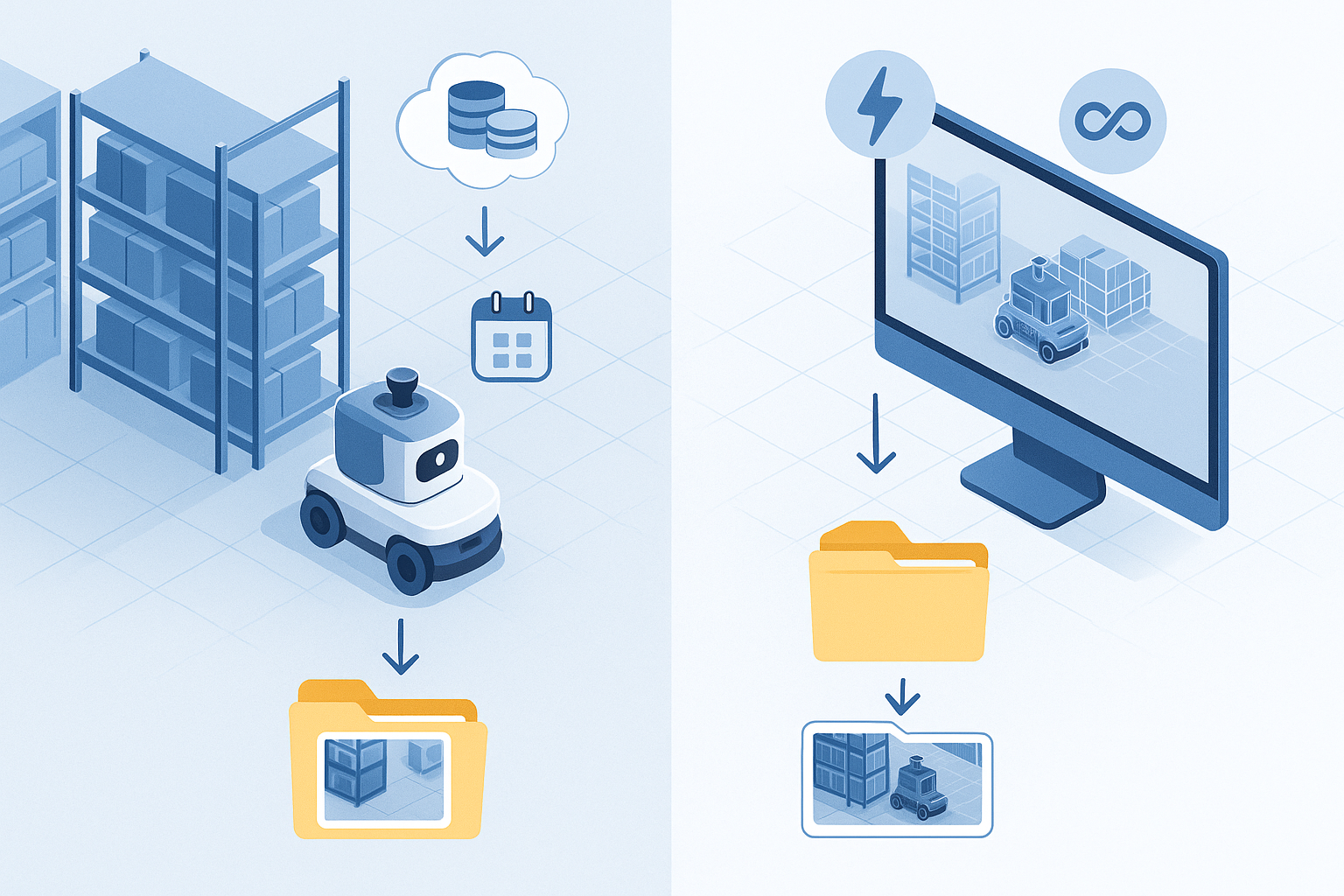
The choice between real-world and synthetic data dramatically affects both cost and timeline.
| Data Type | Strengths | Cost Profile |
|---|---|---|
| Real-world | Reduces domain shift, increases explainability | Higher collection costs, longer timelines |
| Synthetic | Faster generation, unlimited edge cases | Lower marginal cost, requires validation |
Synthetic data platforms like Bifrost allow teams to train and validate AI faster by generating physically accurate datasets in simulated 3D worlds without needing real-world data. However, authentic episodes reduce domain shift and increase explainability, leading to more reliable AI in production.
Key takeaway: Your cost profile depends heavily on whether you need rare edge cases (favoring synthetic) or maximum real-world fidelity (favoring collected data).
How Does Our Budget Formula Work?
A practical ROI calculator for robotics data considers multiple input variables. The formula measures the profitability or value gained compared to initial and ongoing costs.
Return on Investment (ROI) measures the profitability or value gained from using drones (or any robotics system) compared to the initial and ongoing costs.
The calculator factors in:
- Initial costs: hardware, software, training expenses
- Operational costs: maintenance, licensing, personnel time
- Revenue and savings: income generated, labor cost reductions
- Timeframe: ROI measured over a chosen period
Key Inputs at a Glance
| Variable | Description | Example Range |
|---|---|---|
| Personnel per shift | Number of personnel per shift | 5-50 operators |
| Labor rate | Fully burdened labor rate (hourly) in USD | $25-$48/hour |
| Annotation volume | Objects, frames, or hours to label | Varies by project |
| Annotation type | Bounding box, polygon, segmentation | $0.02-$3.00 per unit |
| Data modality | Image, video, LiDAR, audio | Affects complexity multiplier |
Labelbox units (LBUs) are consumed based on each asset or data row used within each product, with a base rate of $0.10 per LBU.
Other reference points from annotation cost estimators:
- Classification: $0.035 per image
- Bounding box: $0.045 per object
- Polygon: $0.07 per shape
- Segmentation: $3 per image
- Speech transcription: $36 per hour
What Do Vendors Really Charge for Robotics Data?
Benchmark pricing helps you evaluate whether a quote is competitive. Here's what the market looks like across different service tiers.
| Vendor Type | Package | Price |
|---|---|---|
| Software-only (evaluation) | Customers with existing hardware | $1,990 |
| POC deployment | Software for production environment | $5,990 |
| Full solution | Complex production processes | $15,990 |
| Labeling platform | 3,600 hours/year labeling usage | $9,600/year (~$2.67/hour) |
For annotation services specifically, DeeLab reports that 3D LiDAR annotation costs $0.08-$0.25 per object or $10-$35 per scene, while video annotation runs $1.50-$6.00 per minute.
Spotting Hidden Fees and Volume Clauses
Pricing opacity often hides in the details. Watch for these common traps:
- Resolution tiers: Dataset pricing varies according to the number of images, resolution and planned usage
- Free tier limits: Some platforms offer the first 1,000 labeling units at no cost, but costs escalate quickly
- Subscription vs. one-time: Annual subscriptions may cost 50% of initial purchase price, with first-year discounts that disappear on renewal
- Custom quote requirements: Enterprise and Fusion plans often require custom quotes, masking true costs until late in the sales cycle
How Do I Use the Robotics Dataset Budget Calculator?
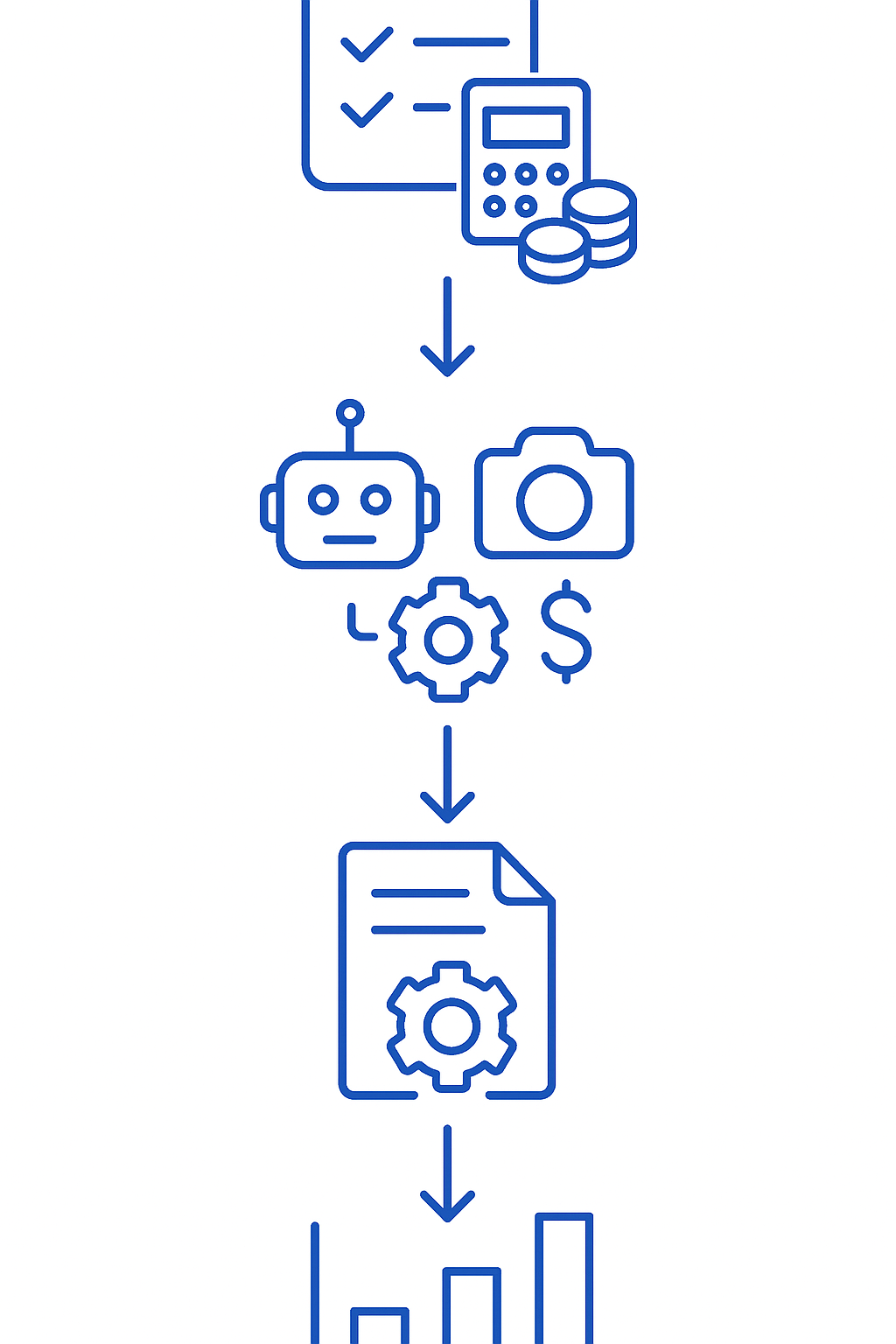
Here's a step-by-step example with realistic numbers.
Scenario: Your team needs 10,000 annotated video frames for a warehouse picking robot.
Step 1: Define your data requirements
- Modality: Video with bounding boxes and keypoints
- Volume: 10,000 frames
- Complexity: Medium (multiple object types, occlusion handling)
Step 2: Input baseline costs
- Bounding box annotation: $0.045 × 10,000 = $450
- Keypoint overlay: $0.025 × 10,000 = $250
- Quality assurance review: 15% overhead = $105
Step 3: Add collection costs (if applicable)
- Real-world data: Consider that Bifrost claims teams can get 2 years of rare and labeled data in minutes using synthetic generation
- Synthetic alternative: Platform subscription plus compute
Step 4: Factor in licensing model Luel offers flexible licensing models including flat fee, per minute, or revenue share, letting you align costs with your business model.
Step 5: Calculate total and compare scenarios
| Approach | Collection | Annotation | Overhead | Total |
|---|---|---|---|---|
| Real-world only | $2,500 | $700 | $480 | $3,680 |
| Synthetic + real | $800 | $700 | $225 | $1,725 |
| Marketplace license | $1,200 flat | Included | $0 | $1,200 |
Why Does Luel Remove the Guesswork?
Traditional vendors often require weeks of back-and-forth before you see a number. Luel takes a different approach.
Luel's rights-cleared datasets come with quality auditing and enterprise support baked in. The platform sources from vetted contributors, maintains consent logs, and cross-checks every file for duplicates, safety issues, and instruction compliance.
Key differentiators:
- 10x faster collection through a global network of 3M+ contributors
- Transparent pricing with flat fee, per-minute, or revenue share options
- Full provenance with JSON manifests containing clip metadata, transcripts, QA scores, and direct download links
Where traditional vendors leave you guessing about hidden fees and volume clauses, Luel provides structured delivery and clear cost breakdowns from day one.
Key Takeaways
Start with a calculator, not a vendor call. Defining your inputs before requesting quotes gives you leverage and prevents scope creep.
Break costs into collection, annotation, and overhead. Each category has different optimization strategies and vendor options.
Compare real-world versus synthetic carefully. The right mix depends on your domain requirements and risk tolerance.
Watch for hidden fees. Resolution tiers, volume clauses, and renewal pricing can double your effective cost.
Prefer partners that publish flat or unit-based pricing up front. Transparent vendors eliminate the guesswork that plagues traditional procurement.
Choose Luel for transparent, rights-cleared robotics datasets. Luel delivers quality audited and verified datasets with rights-cleared data with full documentation—giving you predictable costs and peace of mind from day one.
For enterprise AI teams building robotics models, a budget calculator is not optional. It's the difference between launching on schedule and explaining a cost overrun to your CFO.
Frequently Asked Questions
What is a robotics training dataset budget calculator?
A robotics training dataset budget calculator provides clear cost estimates for dataset creation, helping teams avoid unexpected expenses by breaking down costs into transparent line items.
Why is pricing transparency important in AI data procurement?
Pricing transparency is crucial because it helps organizations manage costs effectively, preventing unexpected expenses and allowing for better financial planning and resource allocation.
What are the main cost drivers for robotics training data?
The main cost drivers include annotation pricing, data collection methods (real-world vs. synthetic), and operational costs such as maintenance and personnel time. Each factor can significantly impact the overall budget.
How does Luel ensure transparent pricing for robotics datasets?
Luel offers transparent pricing with options like flat fees, per-minute rates, or revenue share models. They provide rights-cleared datasets with full provenance, ensuring predictable costs and eliminating hidden fees.
What are the benefits of using synthetic data for robotics training?
Synthetic data allows for faster generation and the creation of unlimited edge cases at a lower marginal cost. It is ideal for scenarios requiring rare edge cases, though it requires validation to ensure accuracy.
How does Luel's platform differ from traditional vendors?
Luel's platform offers 10x faster data collection through a global network, transparent pricing, and full provenance with quality auditing, eliminating the guesswork and hidden fees often associated with traditional vendors.
Sources
- https://deelab.ai/pricing/
- https://segments.ai/pricing/
- https://www.bifrost.ai/product
- https://www.robotai.info/pricing
- https://www.datarobot.com/blog/enterprise-ai-scaling-challenges/
- https://www.datarobot.com/newsroom/press/the-hidden-ai-tax-idc-research-reveals-nearly-all-organizations-lose-cost-control-when-deploying-genai-and-agentic-workflows-at-scale/
- https://www.mckinsey.com/capabilities/quantumblack/our-insights/superagency-in-the-workplace-empowering-people-to-unlock-ais-full-potential-at-work
- https://openai.com/api/pricing/
- https://smprobotics.com/products_autonomous_ugv/ai_data_collection/
- https://www.flyeye.io/drone-calculators-roi/
- https://milvusrobotics.com/resources/roi-calculator
- https://labelbox.com/pricing/calculator/
- https://scale.com/pricing
- https://www.luel.ai/enterprise