Best video dataset providers for robotics AI (Q4 2025)
Explore top video dataset providers for robotics AI in Q4 2025, comparing established vendors and emerging marketplaces for optimal data solutions.
The best video dataset providers for Q4 2025 split between established vendors like Waymo offering 2,030 segments with 12.6M 3D labels under non-commercial licenses, and emerging marketplaces like Luel delivering rights-cleared, custom video datasets in weeks rather than quarters. Teams should combine established datasets for benchmarking with marketplace providers for production-ready, commercially-licensed data targeting specific robotics use cases.
TLDR
- Established providers (Waymo, nuScenes) offer massive, well-annotated datasets but restrict commercial use and update slowly
- Waymo Open Dataset includes 390,000 frames across diverse geographies with comprehensive 3D annotations
- Emerging marketplaces like Luel provide 10x faster collection with full commercial licensing and global contributor networks
- nuScenes remains the industry standard for academic research with free access for researchers
- Synthetic platforms (NVIDIA Isaac Sim) fill gaps when real-world data is limited
- Optimal strategy combines established datasets for benchmarking with marketplace data for production deployment
Robots are hungry for data. Whether you are training a humanoid to fold laundry or teaching an autonomous forklift to navigate a warehouse, video datasets sit at the core of perception, manipulation, and navigation stacks. The search for reliable video dataset providers has split into two camps: established titans with massive, well-annotated corpora, and agile marketplaces that promise faster collection, rights-cleared footage, and global contributor networks.
This guide compares both camps so you can choose the right provider for your Q4 2025 robotics project.
Why high-fidelity video datasets are the fuel for next-gen robotics AI
Robots rely on labeled sensor data to understand their environment and make safe, reliable decisions. Yet data annotation in robotics is distinct because it must handle multiple sensor inputs and fast-changing environments.
The stakes are high. A 2024 McKinsey report found that "over 60% of system perception failures trace back to training data errors, with annotation being a major culprit." When a single mislabeled object in a cluttered 3D scene can cascade into a navigation failure, dataset quality becomes non-negotiable.
At the same time, "AI training data organization and transparency remains opaque, and this impedes our understanding of data authenticity, consent, and the harms and biases in AI models," according to MIT researchers. That opacity is pushing AI teams toward providers who offer full provenance, rights clearance, and auditable pipelines.
The result is a market that now splits along two axes:
Established vendors like Waymo and Motional offer large, curated datasets with deep annotation but often impose non-commercial licenses and slower update cycles.
Emerging marketplaces such as Luel, Eidon, and LXT deliver on-demand, rights-cleared video from global contributor networks, letting teams target edge cases in weeks instead of quarters.
What criteria should you use to rank video dataset providers in 2025?
The intelligent robotics market is projected to reach USD 50.33 billion by 2030 from USD 13.99 billion in 2025, at a CAGR of 29.2%. As the sector scales, AI teams need a structured framework for evaluating providers.
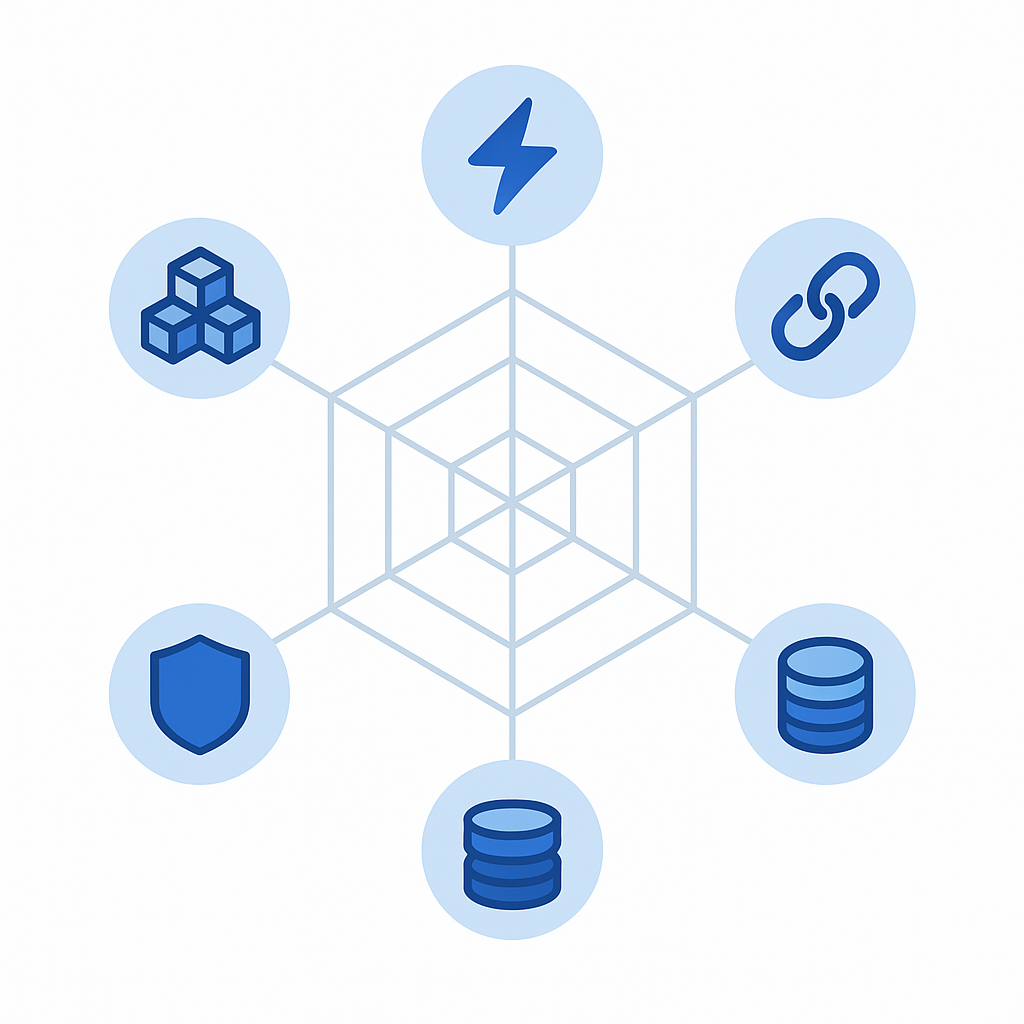
| Criterion | What to look for |
|---|---|
| Scale and diversity | Number of frames, geographic spread, environmental conditions |
| Annotation quality | 3D/4D labels, keypoint tracking, temporal consistency |
| Licensing compliance | Commercial-use rights, chain of title, indemnity clauses |
| Data provenance | Consent records, contributor traceability, audit trails |
| Speed and flexibility | Time-to-delivery, custom collection, API access |
| Cost efficiency | Pricing model, minimum commitments, scaling discounts |
Governments are also raising the bar. The UK government framework defines AI-ready data as "accurate, complete, consistent, secure, and enriched with metadata so it can be trusted and understood by both humans and machines," according to GOV.UK guidance. Those four pillars, technical optimization, data quality, organizational context, and legal compliance, apply equally to commercial robotics projects.
High-quality content from trusted sources strengthens inference integrity, especially as the EU AI Act mandates disclosure of training data for high-risk systems.
Key takeaway: Evaluate providers across scale, annotation rigor, licensing, provenance, speed, and cost before committing to a dataset.
How do established titans like Waymo and nuScenes stack up?
Established datasets have shaped the autonomous driving and robotics research landscape for years. They offer massive corpora, rigorous annotation, and well-documented benchmarks. However, they come with trade-offs.
Waymo Open Dataset
The Waymo Open Dataset is licensed for non-commercial use only, which immediately limits commercial robotics teams. That said, its scale is impressive:
Perception Dataset: 2,030 segments of 20s each, collected at 10Hz (390,000 frames) in diverse geographies and conditions, with 12.6M 3D bounding box labels on lidar data.
Motion Dataset: 103,354 segments covering over 20 million frames, mined for interesting interactions.
End-to-End Driving Dataset: 5,000 segments with 360-degree camera coverage and routing instructions.
Waymo's diversity is a strength: data spans multiple cities, weather conditions, and times of day. But the non-commercial license and slower update cadence mean teams building production robots must look elsewhere for rights-cleared footage.
Motional's nuScenes suite
"In 2019, Motional pioneered safety-focused data sharing with the release of a proprietary dataset, nuScenes, available for free for researchers and the academic community," notes the Motional website. The suite has since expanded:
Panoptic nuScenes (2020): Point-level segmentation applied to the original 1,000 Singapore and Boston driving scenes.
nuPlan: The world's first and largest benchmark for AV planning.
nuReality: VR environments for studying AV-pedestrian interactions.
nuScenes remains a go-to benchmark for academic research, but its focus on autonomous vehicles rather than general robotics limits applicability to humanoid or warehouse use cases.
Key takeaway: Established datasets excel at scale and annotation depth but restrict commercial use and update slowly.
Emerging marketplaces reshaping data access
Emerging marketplaces address the gaps left by established vendors: commercial licensing, faster turnaround, and global contributor diversity. With more than 1 million business customers already using AI platforms, demand for rights-cleared training data is accelerating.
Luel marketplace (our take)
Luel operates a two-sided AI training data marketplace that connects AI teams with a global network of vetted contributors. The platform focuses on video, audio, and voice recordings, enabling enterprises to build high-quality, compliant AI datasets.
What sets Luel apart:
10x faster collection: By cutting out slow vendor processes, Luel delivers custom video datasets in weeks, not quarters.
3M+ global contributors: A diverse network ensures geographic and demographic coverage for edge-case scenarios.
Full provenance and compliance: Every clip comes with rights clearance, consent records, and audit trails, critical for satisfying the EU AI Act.
Founded in 2025 and part of Y Combinator Winter 2026, Luel is building the ecosystem that next-generation robotics teams need.
Crypto-incentivised crowds (Eidon)
Eidon AI takes a decentralized approach. The platform rewards users for capturing real-world hand-eye and task data, making it available for robotics and multimodal AI. Key stats:
12.0K+ collectors across 70+ countries
Over 1TB of data collected to date
"By uniting a global community of contributors through crypto-economic incentives, we aim to collect over one billion minutes of high-quality video and dexterity task data, driving an LLM-like breakthrough in embodied AI," states Eidon AI.
Eidon also develops custom hardware, including finger-tracking gloves and eye-tracking glasses, to enable mass-scale data collection. Blockchain-recorded submissions ensure transparent collaboration, though teams should verify data quality and licensing terms independently.
Other players in this space include LXT, which offers video capture in 150+ countries with multi-layer QA, ISO 27001 certification, and SOC 2/GDPR/HIPAA compliance. Acuity AI similarly focuses on crowdsourcing video data for training robots.
Key takeaway: Emerging marketplaces offer speed, rights clearance, and global diversity that established datasets cannot match.
Synthetic worlds & robotics simulators
When real-world data is limited or restricted, synthetic data generation fills the gap. Simulation platforms now rival physical data collection for training perception, mobility, and manipulation models.
"NVIDIA Isaac Sim is an open-source reference framework built on NVIDIA Omniverse that enables developers to simulate and test AI-driven robotics solutions in physically based virtual environments," according to NVIDIA. The platform offers:
Over 1,000 SimReady 3D assets, including conveyors, boxes, and pallets
Synthetic data generation for training perception, mobility, and manipulation models
Integration with NVIDIA Cosmos, a platform for developing physical AI systems
For humanoid robotics specifically, NVIDIA's GR00T N1 model is trained on a diverse dataset that includes egocentric human videos, real and simulated robot trajectories, and synthetic data. The model outperforms state-of-the-art imitation learning models in simulation benchmarks across multiple robot embodiments.
Another resource is AgiBot World, a large-scale platform comprising over 1 million trajectories across 217 tasks. The dataset achieves an order-of-magnitude increase in data scale compared to existing datasets and is available under the CC BY-NC-SA 4.0 license for non-commercial research.
Key takeaway: Synthetic data platforms like NVIDIA Isaac Sim and AgiBot World can bootstrap training when real-world data is scarce, but commercial licensing varies.
What licensing and provenance traps can derail your robotics project?
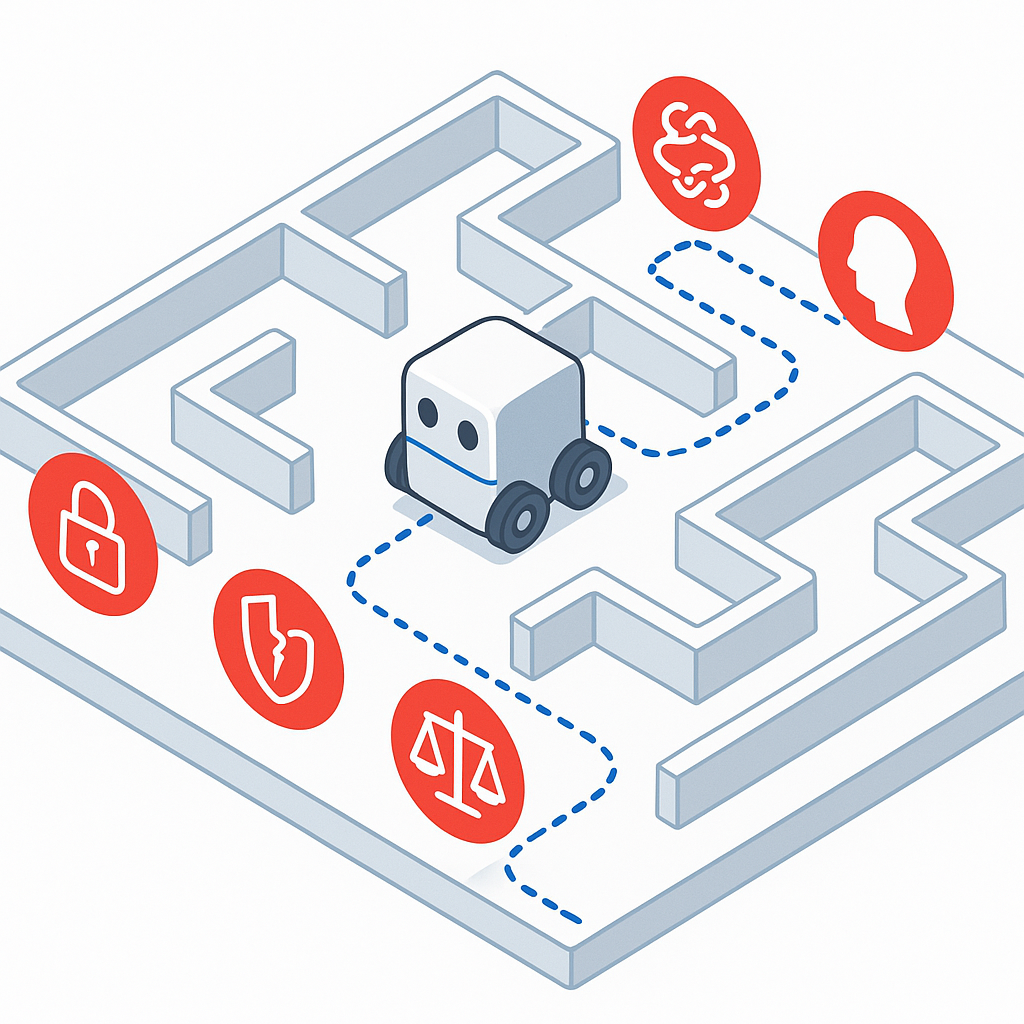
Licensing pitfalls can kill a robotics project faster than poor model accuracy. Teams must navigate several risks:
Non-commercial clauses: Many established datasets, including Waymo Open, restrict use to research. Deploying a model trained on such data in a commercial product violates the license.
Copyright and authorship: "The EU AI Act requires the disclosure of relevant information about training, validation, and testing datasets for high-risk AI systems," notes MIT research. Without clear provenance, compliance becomes impossible.
Indemnity limitations: "Many AI vendors offer some indemnity, but its value depends heavily on the fine print," warns a 2025 legal analysis. Caps, carve-outs, and usage restrictions can leave teams exposed.
Likeness and publicity rights: Synthetic visuals that resemble real individuals can still raise right-of-publicity concerns, even if generated by AI.
Fair use uncertainty: While some early U.S. court decisions have blessed AI model training on copyrighted content as fair use for "spectacularly transformative" technology, the legal landscape remains unsettled.
To avoid these traps:
Request explicit commercial-use licenses
Maintain a production ledger tying each clip to consent records and contributor IDs
Verify that indemnity clauses cover your use case without prohibitive caps
Work with providers like Luel that build compliance and provenance into their pipelines from day one
Choosing the right provider for Q4 2025 projects
The optimal approach for most robotics teams combines a foundational established dataset with agile marketplace top-ups:
Use established datasets like Waymo or nuScenes for benchmarking and academic research where non-commercial licenses apply.
Tap emerging marketplaces like Luel for production-grade, rights-cleared video that targets edge cases, diverse geographies, and custom scenarios.
Layer in synthetic data from NVIDIA Isaac Sim or AgiBot World to augment training where real-world data is limited.
Robotics annotation requires accuracy, consistency, and clear processes. Whichever provider you choose, verify annotation quality, confirm licensing terms, and ensure full provenance before committing.
For teams that need 10x faster collection, a 3M+ global contributor network, and the highest quality assurance, compliance, and provenance, Luel is built to deliver.
Frequently Asked Questions
What are the key criteria for evaluating video dataset providers in 2025?
Key criteria include scale and diversity, annotation quality, licensing compliance, data provenance, speed and flexibility, and cost efficiency. These factors ensure the datasets meet the technical, legal, and organizational needs of AI projects.
How do established vendors like Waymo and Motional compare to emerging marketplaces?
Established vendors like Waymo and Motional offer large, well-annotated datasets but often come with non-commercial licenses and slower updates. Emerging marketplaces like Luel provide faster, rights-cleared data with global diversity, suitable for commercial use.
What advantages do emerging marketplaces offer for video datasets?
Emerging marketplaces offer commercial licensing, faster data collection, and a diverse global contributor network. They provide rights-cleared footage and full provenance, which are crucial for compliance with regulations like the EU AI Act.
How does Luel differentiate itself in the video dataset marketplace?
Luel differentiates itself with a 10x faster data collection process, a network of over 3 million global contributors, and comprehensive compliance and provenance measures. This makes it ideal for teams needing rapid, high-quality, and rights-cleared datasets.
What are the potential licensing pitfalls in using video datasets for robotics AI?
Licensing pitfalls include non-commercial clauses, unclear provenance, limited indemnity, and likeness rights issues. Teams should ensure explicit commercial-use licenses and maintain detailed records to avoid these traps.
Sources
- https://waymo.com/open/about/
- https://motional.com/nuscenes
- https://www.cvat.ai/resources/blog/robotics-data-annotation
- https://mit-genai.pubpub.org/pub/uk7op8zs
- https://www.marketsandmarkets.com/Market-Reports/intelligent-robotics-market-196178430.html
- https://www.gov.uk/government/publications/making-government-datasets-ready-for-ai
- https://www.copyright.com/solutions-annual-copyright-license/business/
- https://openai.com/index/introducing-chatgpt-gov
- https://www.eidon.ai/
- https://www.lxt.ai/services/video-data-collection/
- https://acuityai.sh/faq
- https://developer.nvidia.com/isaac-sim
- https://research.nvidia.com/publication/2025-03_nvidia-isaac-gr00t-n1-open-foundation-model-humanoid-robots
- https://arxiv.org/html/2503.06669v2
- https://www.jdsupra.com/post/fileServer.aspx?fName=76abf1d7-112a-4709-bcef-e8bfbf549bc1.pdf