Audio dataset providers with full provenance: Enterprise compliance
Explore why full provenance in audio datasets is crucial for enterprise compliance and how to address documentation gaps before audits.
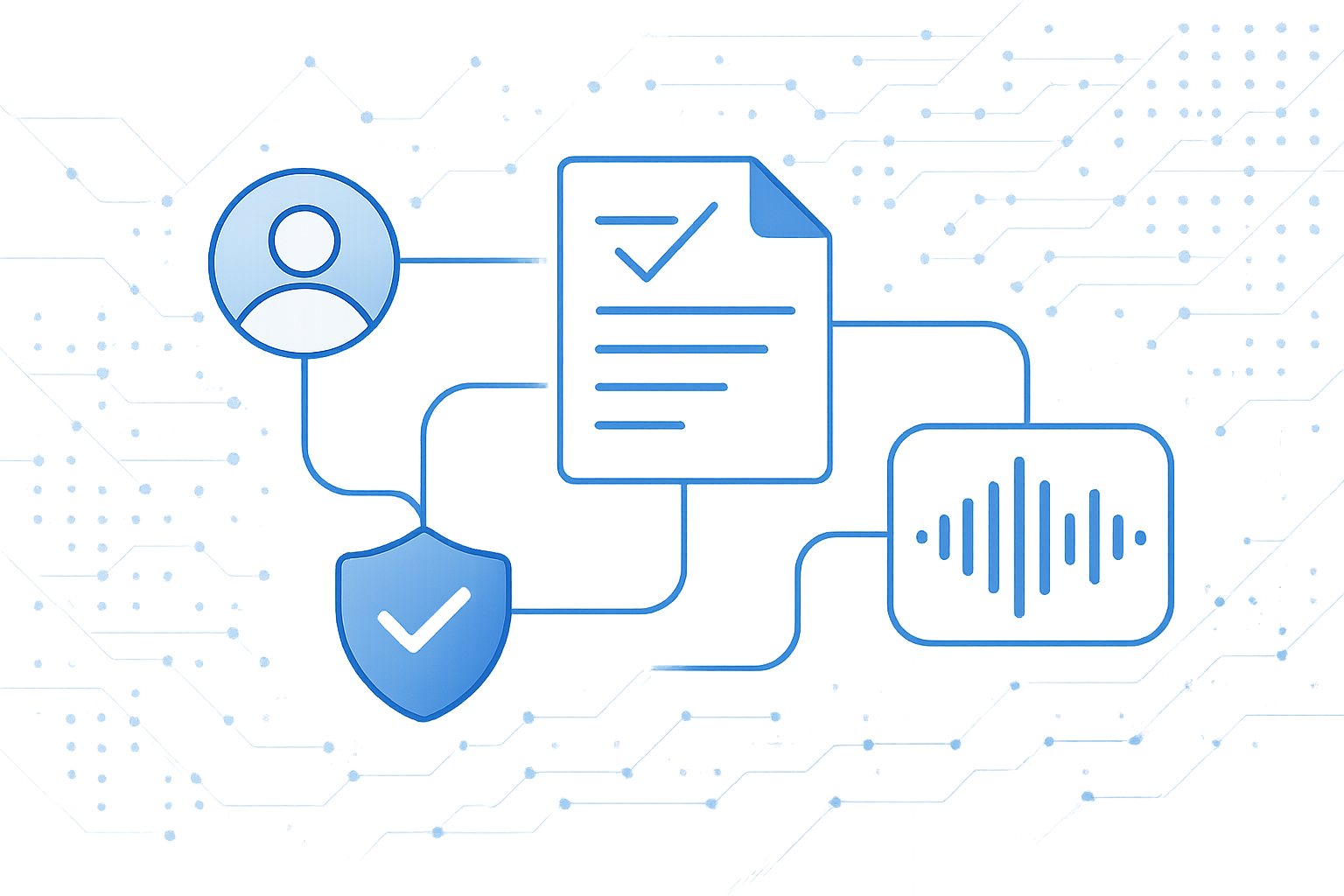
Audio dataset providers achieve full enterprise compliance by delivering complete documentation trails that trace each clip from contributor consent through processing to final delivery. The Data Provenance Initiative found license omission rates exceeding 70% across major dataset platforms, making providers who maintain comprehensive audit logs increasingly critical for enterprises facing EU AI Act and GDPR requirements.
At a Glance
• The EU AI Act mandates dataset disclosure and traceability for high-risk AI systems, requiring providers to register systems before market placement through the EU Database for High-Risk AI Systems
• A 2023 audit revealed error rates of 50%+ in license categorization on widely used dataset hosting sites, extending similar documentation gaps to audio datasets
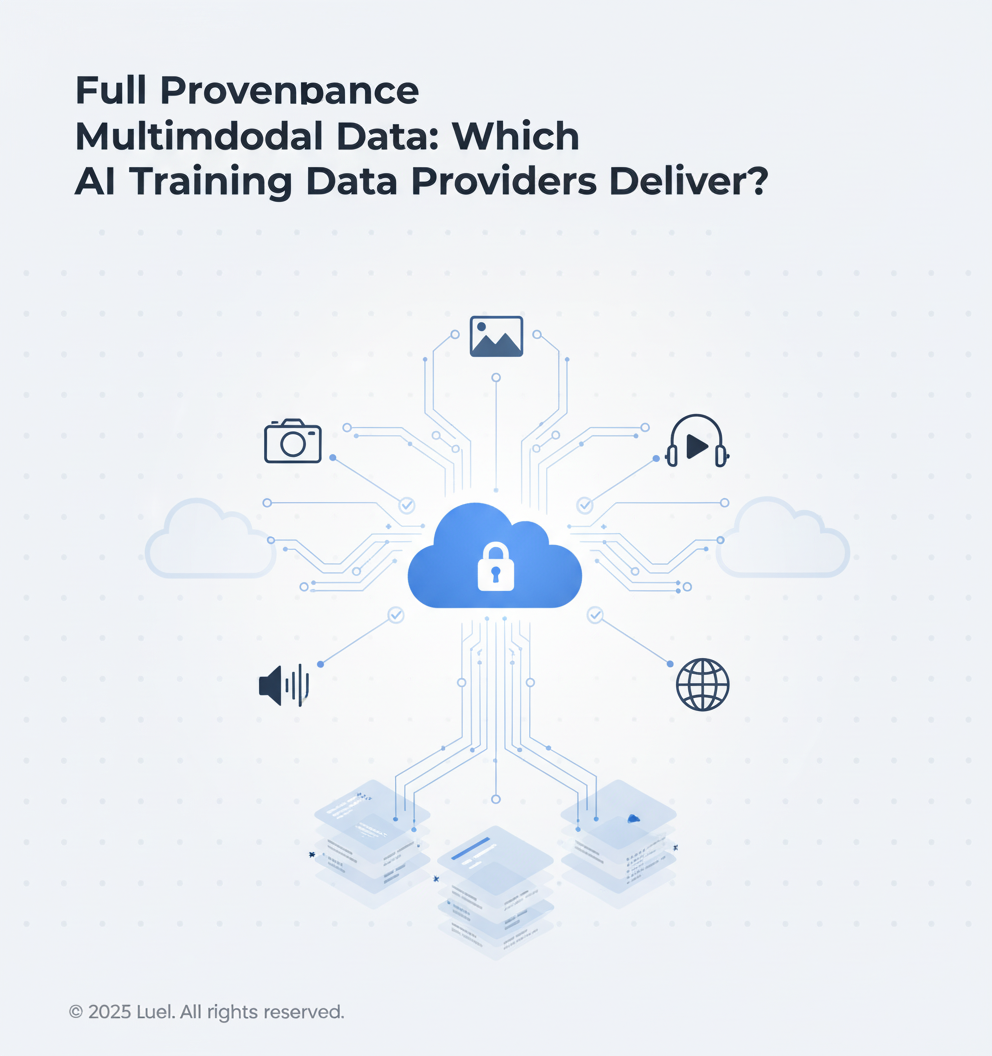
• Complete provenance includes consent releases, PII audits, JSON manifests with clip metadata, QA scores, and direct download links for every dataset
• Major vendors like Scale AI, Bright Data, and TELUS Digital focus primarily on labeling workflows and technical validation rather than end-to-end consent and license lineage
• Enterprises should verify providers can produce manifest files, consent logs, and license metadata on first contact to avoid procurement delays
• The industry is moving toward unified provenance frameworks, with initiatives working to reduce "Unspecified" licenses from 72% to 30% through improved documentation standards
Enterprises hunting for audio dataset providers can no longer treat provenance as an afterthought. Labeled clips alone do not satisfy regulators or legal teams. The new baseline is full-lineage data that traces every recording from contributor consent through processing to final delivery. This post explains why that standard matters, where major vendors fall short, and how to close the gap before your next audit.
Why is provenance non-negotiable for enterprise audio datasets?
Data provenance is the complete, verifiable record of how each audio clip was sourced, licensed, and processed. It encompasses contributor consent logs, PII audits, transformation steps, and final metadata. Without it, enterprises face legal exposure and model failures that no amount of post-hoc cleanup can fix.
The Data Provenance Initiative, a large-scale audit of AI datasets, cataloged over 1,800 text-to-text finetuning datasets and found that documentation gaps are the norm, not the exception. The same pattern extends to audio: "The race to train language models on vast, diverse, and inconsistently documented datasets has raised pressing concerns about the legal and ethical risks for practitioners."
Opacity compounds the problem. Researchers at MIT note that "AI training data organization and transparency remains opaque, and this impedes our understanding of data authenticity, consent, and the harms and biases in AI models." When you cannot trace a clip's origin, you cannot defend its use in court or demonstrate regulatory compliance.
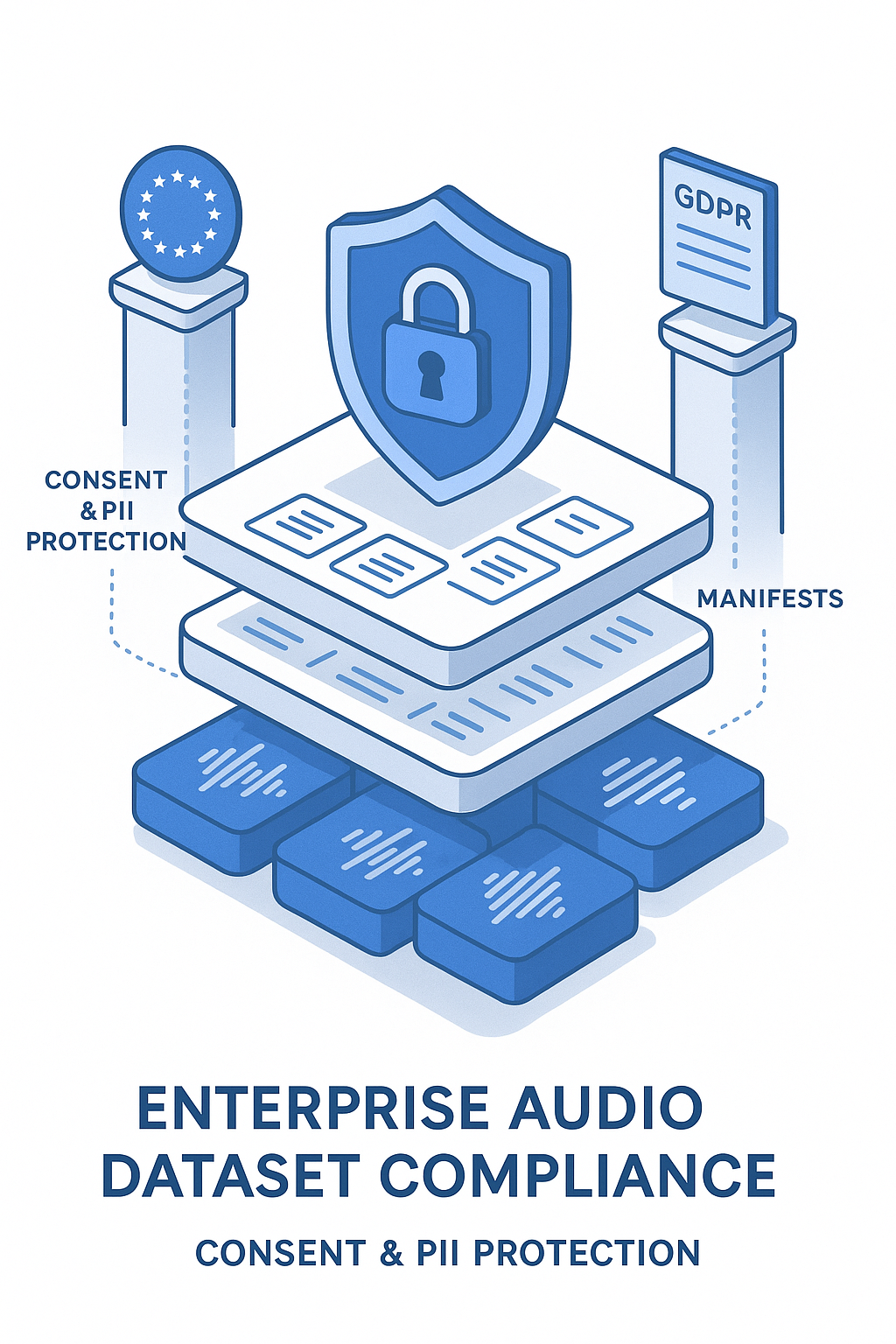
How do the EU AI Act and GDPR tighten compliance for audio data?
Two regulatory frameworks now define the compliance floor for any enterprise operating in or selling to Europe.
The EU AI Act establishes a uniform legal framework for AI systems across the Union. Its stated purpose is "to promote the uptake of human centric and trustworthy artificial intelligence (AI) while ensuring a high level of protection of health, safety, fundamental rights as enshrined in the Charter of Fundamental Rights." For high-risk systems, the Act mandates dataset disclosure and traceability.
Meanwhile, the UK GDPR contains explicit provisions about documenting processing activities. Controllers must maintain records on processing purposes, data sharing, and retention. If you have 250 or more employees, you must document all processing activities without exception.
Article 71 of the AI Act creates an EU Database for High-Risk AI Systems listed in Annex III. This registry requires providers to register systems before market placement, effectively codifying a paper trail requirement.
High-risk AI systems & dataset traceability
Annex III of the AI Act covers use cases ranging from biometric identification to employment screening. If your audio model falls under any of these categories, the documentation bar rises sharply.
The Act mandates that "High-risk AI systems should only be placed on the Union market, put into service or used if they comply with certain mandatory requirements." Among those requirements: proportionate transparency measures, including an obligation to draw up and keep up-to-date documentation to be made available to downstream providers and, upon request, to the AI Office and national competent authorities.
The EU AI Act also requires the disclosure of relevant information about training, validation, and testing datasets for high-risk AI systems. If your vendor cannot produce that information on demand, your compliance position is compromised.
Which documentation gaps plague leading audio dataset competitors?
A 2023 audit by the Data Provenance Initiative found license omission of 70%+ and error rates of 50%+ on widely used dataset hosting sites. Audio providers are not immune. Researchers reviewing audio datasets conclude that "audio datasets often come with scant documentation," leaving enterprises to guess at provenance.
Scale AI markets itself as "the high-leverage data platform for AI-enabled businesses," yet public documentation focuses on labeling workflows rather than end-to-end provenance trails. Enterprises must often request compliance artifacts separately, adding friction and delay.
Bright Data: robust validation, opaque consent trail
Bright Data operates an automated dataset creation platform with a verification and approval phase before delivery. Their validation rules cover uniqueness, filling rate, type verification, schema checks, and data size fluctuation thresholds.
On quality, the company states that its "proactive approach to validated data ensures that any deviation from predefined standards is caught early, reducing the risk of data corruption or misuse."
However, their public documentation emphasizes technical validation rather than consent or license lineage. The data validation framework ensures a minimum percentage of unique values and checks each entry's data type, but it does not surface the contributor consent status or original license terms that regulators increasingly demand.
TELUS Digital: scale without granular audit logs
TELUS Digital commands significant scale. The company boasts "access to the expertise of qualified annotators with our community of over one million AI experts" and delivers more than two billion labels annually.
Their validation pipeline relies on expert review: "Data validation by qualified experts is the pinnacle to maintaining quality assurance for accurate model outcomes." They have earned recognition as a Leader in the Everest Group Data Annotation and Labeling Solutions PEAK Matrix Assessment 2024 and the IDC MarketScape 2023.
Yet the public-facing documentation does not detail license metadata or consent audit logs at the clip level. For enterprises building high-risk systems, this gap can translate into weeks of back-and-forth before procurement closes.
What does end-to-end provenance include? Checklist for buyers
Buyers should expect a provider to deliver more than labeled audio files. A compliant dataset includes:
Data stability validation: Value numbers must not change by more than a defined threshold compared to previous values.
Fields metadata object: Contains metadata about each field in the dataset, including type, active status, requirement status, and description.
Consent releases and PII audits: Audit logging baked in for every dataset.
Rich metadata & manifest files
A manifest file should list every clip with its unique identifier, field-level metadata, and QA scores. Bright Data's API returns a dataset_id, a fields object, and attributes such as type, active, required, and description for each field.
Luel delivers JSON manifests that include clip metadata, transcripts, QA scores, and direct S3 download links. This structure lets compliance teams trace any clip back to its source without manual lookups.
Type verification is equally critical. A robust pipeline "checks each entry's data type against its field type (e.g., string, number, date) to ensure integrity and flag mismatches for correction before processing."
Consent & PII audit logging
Luel sources from vetted contributors, maintains consent logs, and cross-checks every file for duplicates, safety issues, and instruction compliance. This workflow ensures that consent is captured before collection, not inferred after the fact.
Under UK GDPR, controllers must document the name and contact details of the organization, processing purposes, categories of individuals and personal data, recipients, third-country transfers, retention schedules, and technical security measures. A provider that cannot produce these records on request exposes the buyer to regulatory risk.
The stakes are high: "Model developers have no reliable method to retract data from a model after the expensive training process is complete." Prevention is the only viable strategy.
Luel's audit-ready workflow: closing the provenance gap
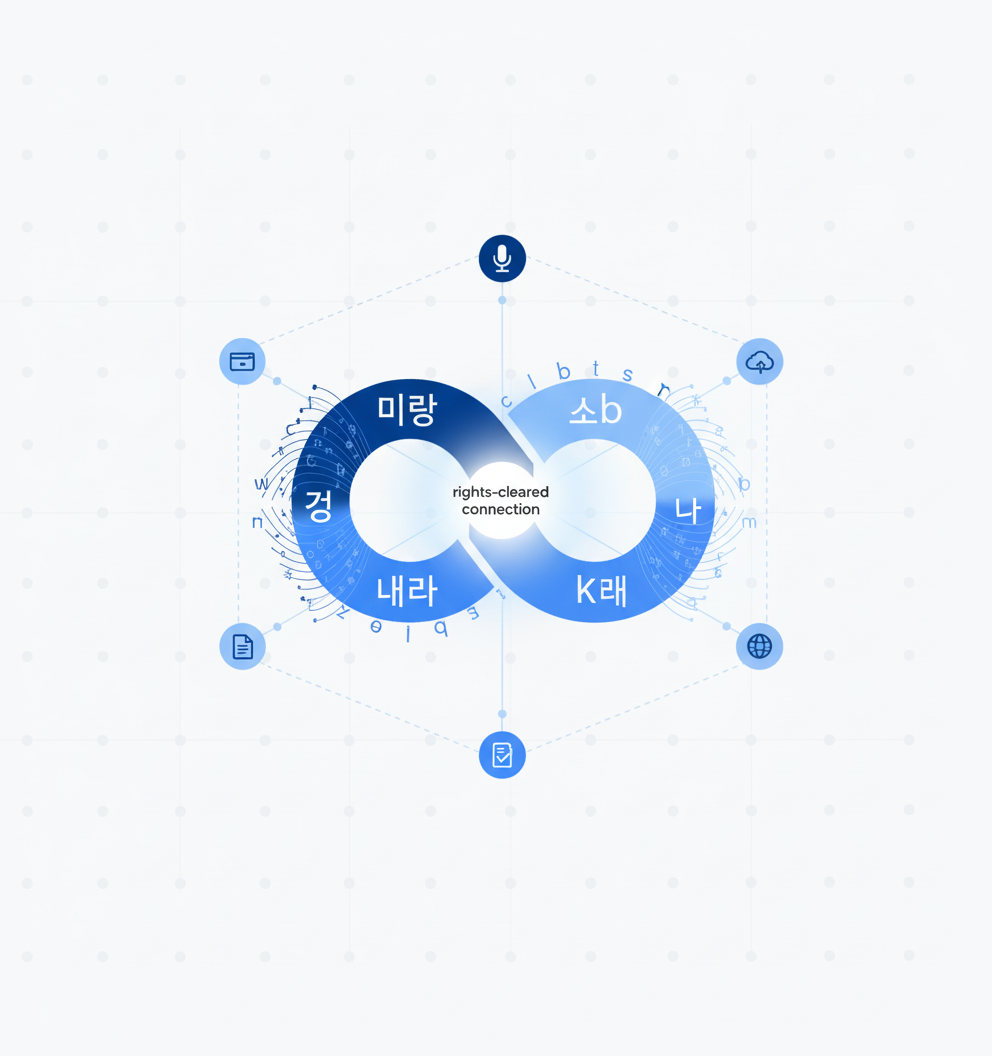
Luel operates a two-sided AI training data marketplace that connects AI teams with a global network of vetted contributors. Every collection is "rights-cleared, quality audited, and delivered with enterprise support."
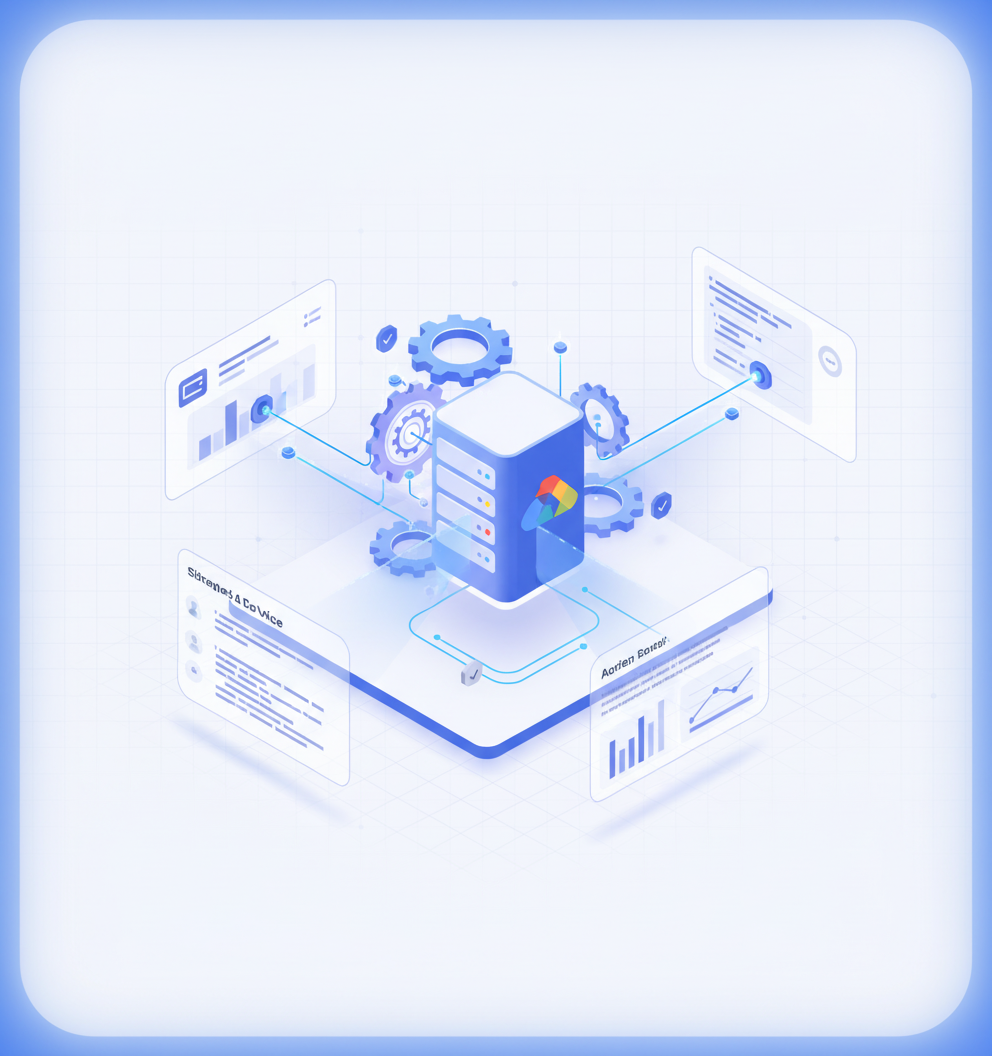
The platform distinguishes itself by cutting out slow vendor processes, ensuring data compliance and diversity, and leveraging automated content analysis tools such as Google Vertex AI for quality and categorization. Consent releases, PII audits, and audit logging are baked in for every dataset.
With a 3M+ global contributor network, Luel offers 10x faster collection while maintaining the highest quality assurance, compliance, and provenance standards.
Sample rights-cleared audio collections
Luel's catalog demonstrates what audit-ready data looks like in practice:
| Dataset | Description | Languages |
|---|---|---|
| Professional Meeting Conversation | Structured multi-speaker meeting recordings with fully transcribed dialogues | English, Spanish, French, German, Japanese |
| Spontaneous Monologue Speech | Natural single-speaker speech recordings with fully transcribed spontaneous speech patterns | English, Spanish, French, German, Japanese |
| Spanish-English Contact Center ASR | Bilingual contact center conversations with dual-channel recordings and speaker separation | Spanish, English |
Each dataset ships with JSON manifests, transcripts, QA scores, and direct download links.
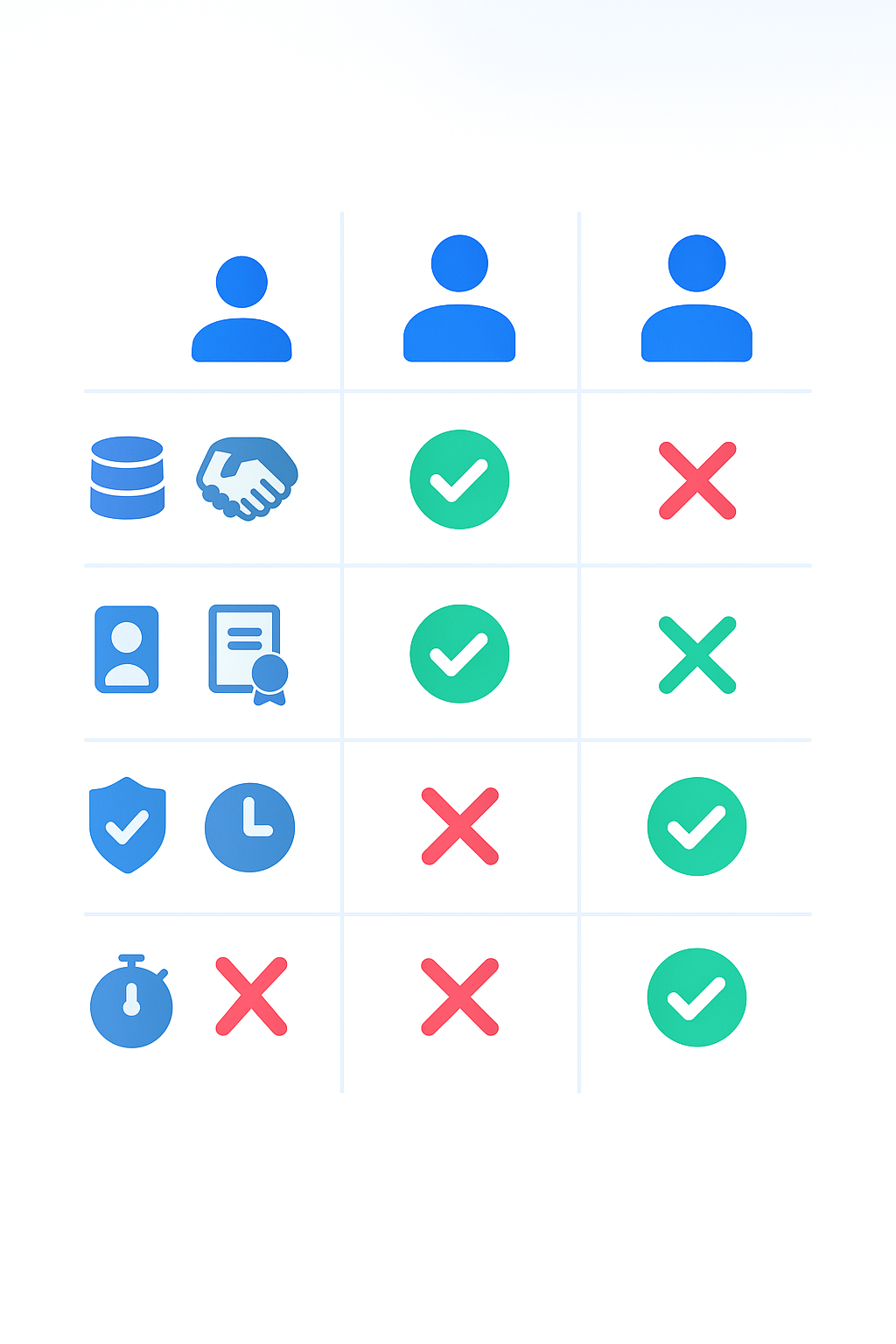
How to score audio dataset providers: evaluation matrix & KPIs
Use the following framework to compare vendors before signing a contract.
| Criterion | What to Ask | Pass Threshold |
|---|---|---|
| Schema validation | Does the provider verify data types against field definitions? | Automated checks with error flagging |
| Consent documentation | Can the provider supply consent logs per clip? | Yes, accessible via API or manifest |
| License metadata | Is the original license attached to each record? | Attached and machine-readable |
| Governance approach | Is there a holistic governance strategy combining technology, policy, and education? | Documented and auditable |
| Time allocation | What percentage of project time goes to data preparation? | Target < 80%; industry average is 80% |
"Data validation refers to the process of ensuring the accuracy and quality of data." Vendors that cannot articulate their validation rules in writing are unlikely to satisfy a compliance audit.
Key takeaway: If a provider cannot produce manifest files, consent logs, and license metadata on the first call, factor additional procurement time into your timeline.
Toward unified provenance frameworks
The industry is moving toward standardized provenance tooling. Cohere's research team released an entire multimodal audit, "allowing practitioners to trace data provenance across text, speech, and video."
Researchers argue that "a unified data provenance framework is crucial to establish an ecosystem where data authenticity, consent, privacy, legality, and relevance are holistically considered and managed."
At the policy level, the EU is investing in technologies to automate compliance. Data Labs, defined as data service providers that link data spaces with the AI ecosystem, are emerging as intermediaries that can certify provenance before data enters a training pipeline.
Enterprises that adopt unified frameworks now will face lower switching costs as regulations tighten.
Key takeaways for compliance-ready audio data
Provenance is no longer optional. Regulators, legal teams, and downstream customers all expect full-lineage documentation before a model reaches production.
Demand consent releases, PII audits, and audit logging baked in for every dataset.
Require JSON manifests with clip metadata, transcripts, QA scores, and direct download links.
Verify that datasets are rights-cleared and quality audited with enterprise support before signing.
Luel delivers all three by connecting AI teams with vetted contributors who provide rights-cleared multimodal training data at scale. If your current provider cannot match that standard, the compliance gap will only widen as enforcement accelerates.
Frequently Asked Questions
What is data provenance in audio datasets?
Data provenance refers to the complete, verifiable record of how each audio clip was sourced, licensed, and processed, including contributor consent logs, PII audits, and transformation steps. It ensures legal compliance and model reliability.
Why is provenance important for enterprise audio datasets?
Provenance is crucial because it provides a traceable record of data origins, ensuring compliance with regulations like the EU AI Act and GDPR. Without it, enterprises risk legal exposure and model inaccuracies.
How do the EU AI Act and GDPR affect audio data compliance?
The EU AI Act and GDPR set strict requirements for dataset disclosure and traceability, mandating that enterprises document processing activities and maintain records to ensure compliance with legal standards.
What documentation gaps exist in leading audio dataset providers?
Many providers lack comprehensive documentation, such as consent logs and license metadata, which are essential for compliance. This can lead to delays and increased risk during procurement and audits.
How does Luel ensure compliance in audio datasets?
Luel provides rights-cleared, quality-audited datasets with full provenance, including consent releases, PII audits, and JSON manifests, ensuring compliance and reducing procurement time.
Sources
- https://arxiv.org/abs/2310.16787
- https://artificialintelligenceact.eu/chapter/8/
- https://dataprovenance-explorer.org/
- https://hal.science/hal-04290233/file/2310.16787.pdf
- https://mit-genai.pubpub.org/pub/uk7op8zs/release/2
- https://eur-lex.europa.eu/legal-content/EN/TXT/HTML/?uri=OJ:L_202401689#rct_71
- https://ico.org.uk/for-organisations/uk-gdpr-guidance-and-resources/accountability-and-governance/guide-to-accountability-and-governance/documentation
- https://www.bundesnetzagentur.de/DE/Fachthemen/Digitales/KI/_functions/EU-Leitlinien.pdf?__blob=publicationFile&v=2
- https://arxiv.org/html/2412.05120v1
- https://docs.brightdata.com/datasets/data-validation/data-validation-for-customers
- https://brightdata.com/products/datasets/validation
- https://docs.brightdata.com/datasets/data-validation/data-validation-for-partners
- https://www.telusdigital.com/solutions/data-and-ai-solutions/data-annotation
- https://www.telusinternational.com/solutions/ai-data-solutions/data-validation-services
- https://docs.brightdata.com/api-reference/marketplace-dataset-api/get-dataset-metadata
- https://www.luel.ai/enterprise
- https://foundation.mozilla.org/en/research/library/in-transparency-we-trust/research-report/
- https://www.herohunt.ai/blog/the-ultimate-ai-data-labeling-industry-overview
- https://cohere.com/research/papers/bridging-the-data-provenance-gap-across-text-speech-and-video-2024-12-18
- https://eur-lex.europa.eu/legal-content/EN/TXT/HTML/?uri=CELEX:52025DC0835&qid=1763974715747